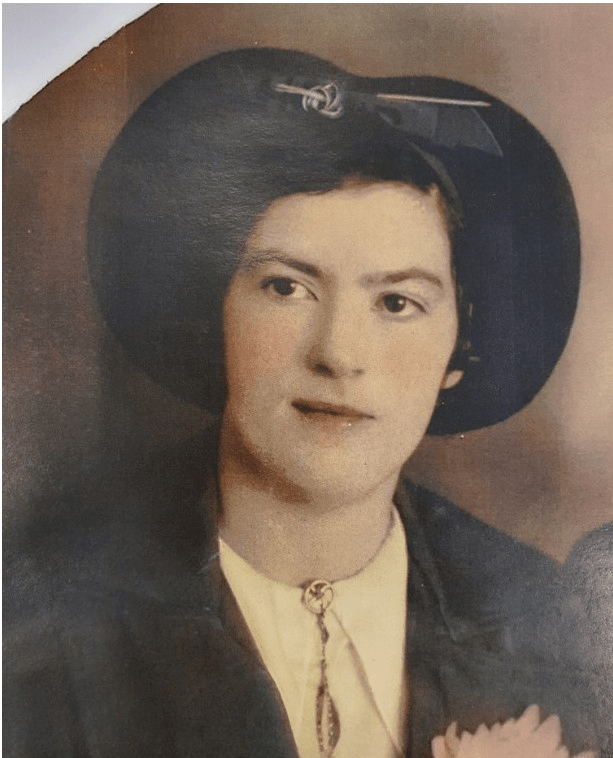
On November 8, 1945, just months after the end of the Second World War, 29-year-old May Gwendoline Walton disappeared somewhere in New South Wales, Australia.
More than 80 years later, May’s name remains among Australia’s historical missing-person cases. Yet unlike many disappearances that have accumulated newspaper stories, witness accounts and police theories over the decades, May’s case is remarkable for something entirely different.
There is almost nothing.
There is no readily available account describing May’s final morning. No publicly documented last conversation. No abandoned vehicle, mysterious telephone call or confirmed sighting that allows us to follow her movements through the final hours before she vanished.
What survives publicly is essentially a name, an age, a date and an unresolved disappearance.
May was 29 when she disappeared on November 8, 1945. Beyond those basic details, much of her life remains frustratingly difficult to reconstruct from publicly accessible records. Her occupation has not been established. It is unclear whether Walton was her maiden or married name. I could not reliably establish whether she had a husband or children, precisely where in New South Wales she lived, where she was last seen or who first realized she was missing.
Even the circumstances under which May originally became a missing person remain unclear.
That absence of information creates an unusual problem when trying to understand her case. Without knowing where May was going, who she was with, what was happening in her personal life or even the exact community from which she disappeared, virtually every explanation remains possible.
One possibility is that May simply chose to leave.
Australia in 1945 offered opportunities for someone to disappear that would be almost unimaginable today. There were no mobile phones, CCTV cameras, electronic banking records or computerized databases quietly recording a person’s movements. Police agencies couldn’t instantly search interconnected national systems. Identification practices were different, and relocating to another town, or even another state, could create considerable distance between someone and their former life.
May also disappeared during an extraordinary period of social upheaval.
The Second World War had ended only months earlier. Servicemen and women were returning home. Families had spent years separated. Relationships had changed. People were moving, looking for employment and attempting to rebuild lives disrupted by six years of war.
Could May have decided to start again somewhere else? It’s possible. But there is currently no publicly available evidence showing that she did. There is also another possibility: May may have suffered an accident.
If she disappeared while travelling, walking through an isolated area or near water, an accidental death could potentially have gone undiscovered or unidentified. Australia is enormous, and in 1945 investigators didn’t have the forensic tools available today. Even if remains had eventually been discovered somewhere else, connecting them to May could have been extraordinarily difficult.
There was no DNA profiling and there was no national DNA database. Dental comparisons depended upon investigators knowing which missing person they were looking for and locating appropriate records. Information about unidentified remains discovered in one jurisdiction might never have reached investigators looking for a missing woman somewhere else.
That raises one of the more intriguing possibilities in May’s case. Perhaps she hasn’t truly been “missing” for all these decades. Perhaps she was found long ago but was never identified. Modern Australian missing-person investigations increasingly compare long-term missing people against unidentified human remains, using DNA, forensic anthropology and other techniques unavailable to investigators in 1945. For extremely old cases like May’s, resolving an unidentified-remains case could potentially resolve a missing-person case at the same time.
Then there is the possibility nobody wants to consider. May may have encountered someone who harmed her.
There is currently no reliable public evidence establishing that May was murdered, and I found no credible record naming a suspect or person of interest in connection with her disappearance. There is no publicly documented crime scene and nothing establishing that police believed foul play was involved.
But without knowing the circumstances surrounding her final known movements, foul play cannot reasonably be eliminated either.
If May disappeared after meeting someone, travelling with another person or leaving a residence, the identity of that person could have been enormously important. Unfortunately, the publicly accessible information simply doesn’t provide enough detail to determine whether such an individual existed.
There is also a more unusual possibility worth considering.
May’s disappearance may not have been formally reported in 1945.
NSW Police has acknowledged more generally that some historical missing-person cases involve people whose disappearances occurred decades before they were eventually formally reported to police. When that happens, investigators may essentially be trying to reconstruct someone’s disappearance long after witnesses have died, records have vanished and memories have faded.
There is no evidence currently available establishing that this happened with May, so it shouldn’t be presented as part of her known story.
But it could help explain something particularly puzzling about her case.
Despite searching variations of May Gwendoline Walton, May Walton, her disappearance date and numerous combinations involving New South Wales, I could not locate a reliable contemporary newspaper account from 1945 describing her disappearance.
That doesn’t prove one doesn’t exist.
Historical newspaper collections aren’t perfect. Optical character recognition can misread old print, some publications haven’t been completely digitized, and a newspaper article might identify her under a different name or spelling. If Walton was her married name – or if she commonly used another first name – the original reports could also be hiding under terminology we simply don’t know to search.
Still, the lack of an easily identifiable contemporary report is interesting. If May wasn’t reported missing until considerably later, investigators would have faced an almost impossible task. Imagine trying to determine where someone went on November 8, 1945 after decades had already passed.
The people who last saw her might have died. Homes might have been demolished. Businesses might have closed. Letters and photographs could have disappeared. Police records might have been destroyed or misplaced.
People who once knew exactly what May had been planning that day are quite likely no longer have been alive to tell investigators.
There is another possibility that occasionally occurs in historical missing-person cases: perhaps May survived under another identity.
A change of surname through marriage could make a woman particularly difficult to trace historically. If May moved interstate or overseas and began using another surname, later generations might never have realized that the woman they knew was also the missing May Walton from New South Wales.
Again, there is currently no evidence that this happened.
And it would create another mystery of its own: why didn’t she contact the people who were apparently looking for her?
Unless, of course, she never knew anyone was.
That possibility depends heavily upon circumstances we simply don’t have.
There are therefore several broad theories that could potentially explain May’s disappearance: she voluntarily left and established another life; she suffered a fatal accident and was never found; unidentified remains discovered elsewhere were never connected to her; she died by suicide without her remains being located or identified; she was the victim of foul play; or the historical record itself has become incomplete enough that May’s eventual fate was simply never connected back to her missing-person case.
At present, none of those explanations is supported strongly enough to rise above the others.
And that may be what makes May’s disappearance so haunting.
Most cold cases leave behind a trail.
There are witnesses to reconsider. Suspects to examine. Old statements to reread. Cars to trace. Locations to search. Family recollections to preserve.
With May, even the beginning of the story appears to have been lost.
We don’t know what she was wearing when she disappeared.
We don’t know where she was heading.
We don’t know whether she packed belongings.
We don’t know whether she had money with her.
We don’t know whether she had recently argued with someone.
We don’t know whether she was frightened.
We don’t know whether she intended to return.
And we don’t even know whether November 8, 1945 was originally recognized as the day something terrible happened – whether its significance was only understood much later.
Today, May would be approximately 110 years old. The possibility of finding her alive has effectively disappeared with the passage of time.
But solving her disappearance hasn’t necessarily become impossible.
DNA has transformed investigations that once seemed permanently beyond resolution. Historical unidentified remains can be reexamined. Families can provide genetic samples. Genealogical research can reconstruct identities from fragmentary records. Old newspaper archives continue to be digitized, sometimes revealing information that was effectively inaccessible for generations.
Perhaps somewhere in an Australian archive is a newspaper article mentioning May under a name we haven’t connected to her yet.
Perhaps an electoral roll could establish exactly where she lived.
Perhaps marriage records could reveal whether Walton was her birth name.
Perhaps surviving police records contain information that has never been published.
Or perhaps somewhere there is an unidentified woman whose story has remained separate from May’s for more than eight decades.
For now, however, the responsible conclusion is frustratingly simple.
May Gwendoline Walton was 29 years old when she disappeared in New South Wales on November 8, 1945. Publicly accessible information does not establish what happened to her, and I could find no reliable evidence identifying a suspect, establishing foul play, confirming a voluntary disappearance or showing that she was subsequently located.
There are theories.
There are possibilities.
But there is not yet an answer.
More than 80 years later, May’s case is therefore a mystery within a mystery. We don’t simply lack the ending to her story.
Somewhere along the way, we seem to have lost much of the beginning as well.
Anyone with information that may assist investigators is asked to contact NSW Crime Stoppers at 1800 333 000 or the NSW Police Missing Persons Registry at missingpersons@police.nsw.gov.au
Sources: Australian Federal Police National Missing Persons Coordination Centre, NSW Police Force Missing Persons Registry and Missing Persons Enquiry System, Australian Missing Persons Register, Australian historical newspaper and archival search records, and Commonwealth of Australia historical records.
🕯️ Subscribe to Someone Saw Something. I dig through the details, ask the unanswered questions, and occasionally fall down research rabbit holes so you don’t have to. 🧡

