Irene Jacknife’s story remained unresolved for nearly half a century, but not in the way her family could ever have imagined. For decades, those who loved her did not know where she had gone or what had happened to her. All the while, Irene had been buried in Edmonton as an unidentified woman, her name separated from her remains by a mystery that would take modern DNA technology to finally solve.
Irene was an Indigenous woman from Alberta who was approximately 30 years old when she disappeared in 1976. She had connections to the Drayton Valley area and was remembered by her family as a loving mother with a playful personality. Her children remembered her cooking and baking, playing with them on the floor, and even making homemade toys from cardboard boxes when there weren’t toys available. There were memories of playing outdoors together and climbing a crabapple tree, small moments that remained with her family long after Irene was gone.
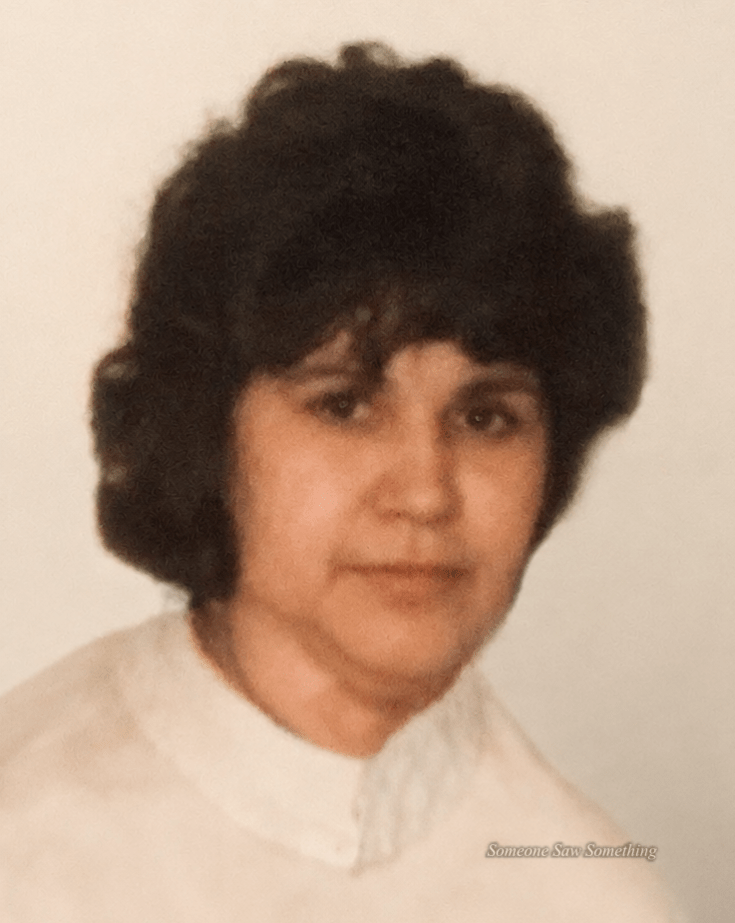
For years, Irene’s relatives believed her disappearance had been reported to the RCMP in 1976. However, when Alberta RCMP formally began investigating Irene’s disappearance decades later, in 2022, investigators were unable to locate a record showing that a missing-person report had actually been filed at the time she vanished. Authorities would later describe the situation as a miscommunication surrounding the original reporting of Irene’s disappearance.
What Irene’s family could not have known was that another mystery had begun unfolding in Edmonton at almost exactly the same time.
On June 11, 1976, an unidentified woman died outside an address in Edmonton. Authorities investigated the death and an autopsy determined that she had died from medical causes. There was no indication that her death was suspicious or the result of a crime.
The problem was that no one knew her name.
Investigators were unable to establish the woman’s identity. This was decades before the forensic DNA techniques routinely used in missing-person and unidentified-remains investigations today, and eventually the woman was buried in an Edmonton cemetery without her true identity being discovered.
And so, two stories continued separately for decades.
There was Irene Jacknife, a woman whose family did not know what had happened to her.
And there was an unidentified woman buried in Edmonton whose family could not be found.
No one realized they were the same person.
Nearly five decades later, investigators were finally given an opportunity to connect those two mysteries through Project Match. Established in 2023, the initiative brought together the Edmonton Police Service Missing Persons Unit, the RCMP’s National Centre for Missing Persons and Unidentified Remains, and Alberta’s Office of the Chief Medical Examiner. Its purpose was to revisit Edmonton’s historical unidentified-remains cases using investigative and forensic technology that simply had not existed when many of the people were originally found.
There was another obstacle in Irene’s case. Because DNA samples had not been collected from the unidentified woman in 1976, investigators needed to obtain samples from her remains.
In the fall of 2023, the unidentified remains were exhumed from the Edmonton cemetery where they had rested for decades. Indigenous Elders were present to oversee sacred ceremonies during the process. The remains were then re-examined with the assistance of the Office of the Chief Medical Examiner and a forensic anthropologist, allowing investigators to obtain samples suitable for DNA analysis.
Those samples could then be compared against familial DNA that had been submitted to the RCMP’s National DNA Data Bank.
This time, investigators found the connection that had been missing since 1976.
The unidentified woman who had died in Edmonton on June 11, 1976 was Irene Jacknife.
On February 23, 2024, Edmonton police publicly announced that Irene had finally been identified. After nearly 48 years, the woman buried without her identity once again had her name.
Investigators also confirmed that Irene’s death was not considered criminal. The original investigation determined that she had died from medical causes, and nothing uncovered during the modern investigation changed that conclusion.
Irene was not the only woman identified through Project Match. Investigators simultaneously announced that another Indigenous woman who had remained unidentified for decades had been identified as 24-year-old Louise Laderoute, a member of Papaschase First Nation who disappeared from Edmonton in 1975.
For Irene’s family, however, the discovery finally answered the question that had followed them through generations. They now knew where Irene had gone and what had happened to her, even though knowing could never restore the decades they had spent without those answers.
There is a particularly haunting element to Irene’s story. She had not disappeared somewhere impossibly distant, leaving behind a trail investigators could never follow. Her remains had been located in 1976. Authorities had investigated her death. She had been buried in Edmonton.
The missing woman and the unidentified woman simply hadn’t been connected.
For almost 48 years, Irene Jacknife existed in two different systems – one as a woman whose family wondered what had happened to her, and another as an unidentified person waiting for someone to give her back her name.
Modern forensic science finally brought those two stories together.
Irene’s identification cannot return the years her family lost with her, but it ended one part of their uncertainty. It also demonstrates why historical unidentified-remains cases are worth revisiting. Somewhere in an old case file, cemetery, evidence room, or DNA database may be the answer another family has spent decades waiting to receive.
After almost half a century, Irene was unidentified no longer.
She was Irene Jacknife. A mother, a sister, and a woman who had never been forgotten by the people who loved her.
Sources: Edmonton Police Service, Alberta RCMP, RCMP National Centre for Missing Persons and Unidentified Remains, Alberta Office of the Chief Medical Examiner, APTN News, Global News, CityNews Edmonton.
🕯️ Subscribe to Someone Saw Something. I dig through the details, ask the unanswered questions, and occasionally fall down research rabbit holes so you don’t have to. 🧡

