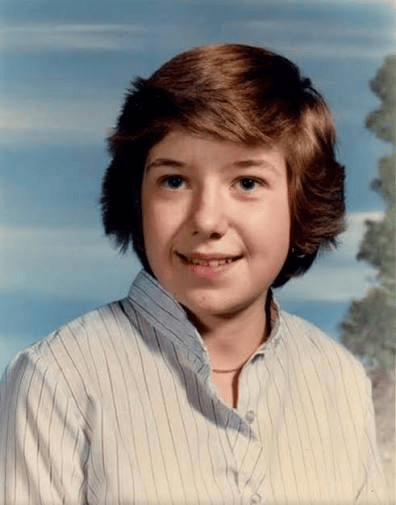
On the evening of April 22, 1981, fifteen-year-old Kelly Jane Evelyn Cook walked out of her family home in the quiet farming community of Standard, Alberta, believing she was going to babysit for a local family. It was supposed to be an ordinary evening, the kind of arrangement she had made before. Instead, Kelly climbed into a stranger’s vehicle and vanished, leaving behind a mystery that would haunt her family and investigators for decades. More than 45 years later, the identity of the person responsible for her murder remains unknown.
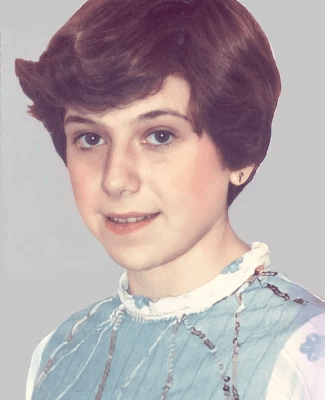
Kelly lived with her parents and two younger siblings in Standard, a small community approximately 70 kilometres northeast of Calgary. She was a Grade 10 student who occasionally earned extra money babysitting. Those who knew her could never have imagined that something as routine as accepting a babysitting job would place her in the path of someone who apparently had very different intentions.
The events leading to Kelly’s disappearance began that morning, when a man telephoned the Cook residence at approximately 8:20am. He introduced himself as Bill Christensen and explained that he needed someone to look after his children that evening. Although Kelly did not know him personally, the Christensen surname was familiar in the area, and the request did not initially appear suspicious. After discussing the arrangement with her mother, Kelly agreed to take the job. The caller said he would collect her from the family home at approximately 8:30 that evening.
What the Cook family did not realize was that Kelly had not been the caller’s first choice. Several days earlier, a 17-year-old girl, publicly identified by the pseudonym Stacey, had reportedly received a similar telephone call from a man requesting babysitting services. She declined because she already had plans. When the caller asked whether she knew anyone else who might be available, Kelly was among the names she suggested. This detail would later become an important part of the investigation, raising the possibility that the caller had been deliberately seeking a teenage girl rather than simply looking for someone to care for his children.
At approximately 8:30pm, a large North American-made vehicle arrived outside the Cook residence. Kelly left the house and climbed inside with the unidentified driver. Her twelve-year-old sister, Marnie, watched from a basement window as the vehicle pulled away. It was the last time she would see Kelly alive.
Kelly had been instructed to telephone home once she reached the babysitting location, but the expected call never came. As the evening progressed, her family grew increasingly worried. Attempts to establish where she had gone were unsuccessful, and the Royal Canadian Mounted Police were contacted. By the end of the night, what had begun as an ordinary babysitting arrangement had become a missing-person investigation.
The disappearance shocked Standard and the surrounding communities. Police, volunteers, friends, and neighbours joined the search, examining rural properties, abandoned buildings, roads, and surrounding countryside. Investigators attempted to identify the man who had called himself Bill Christensen, but the name provided no clear answers. No one could establish where Kelly had been taken, and the search continued without any confirmed trace of her whereabouts.
On June 28, 1981, more than two months after Kelly disappeared, the investigation took a devastating turn. Her body was discovered in the Chin Lake Reservoir, south of Taber, Alberta. Her remains had been weighed down with concrete blocks, apparently in an effort to conceal them beneath the water. Dental records were used to confirm her identity, bringing an end to the search for a missing teenager and beginning a homicide investigation that would remain unresolved for generations.
The discovery established that Kelly had been murdered, but it did not reveal who had taken her from her home or what had happened during the weeks between her disappearance and the recovery of her body. Investigators continued examining witness accounts, possible suspects, and the movements of the unidentified driver. A composite sketch was developed from descriptions of a man believed to be connected to the case. He was generally described as being between 30 and 40 years old, approximately 5 feet 10 inches tall, and of medium build.
One investigative lead involved a man who had reportedly used a telephone at a service station near Standard. The station operator recalled a conversation concerning a babysitting arrangement, leading investigators to consider whether the unidentified caller had made contact with Kelly from that location. However, the information did not produce a publicly confirmed identification.
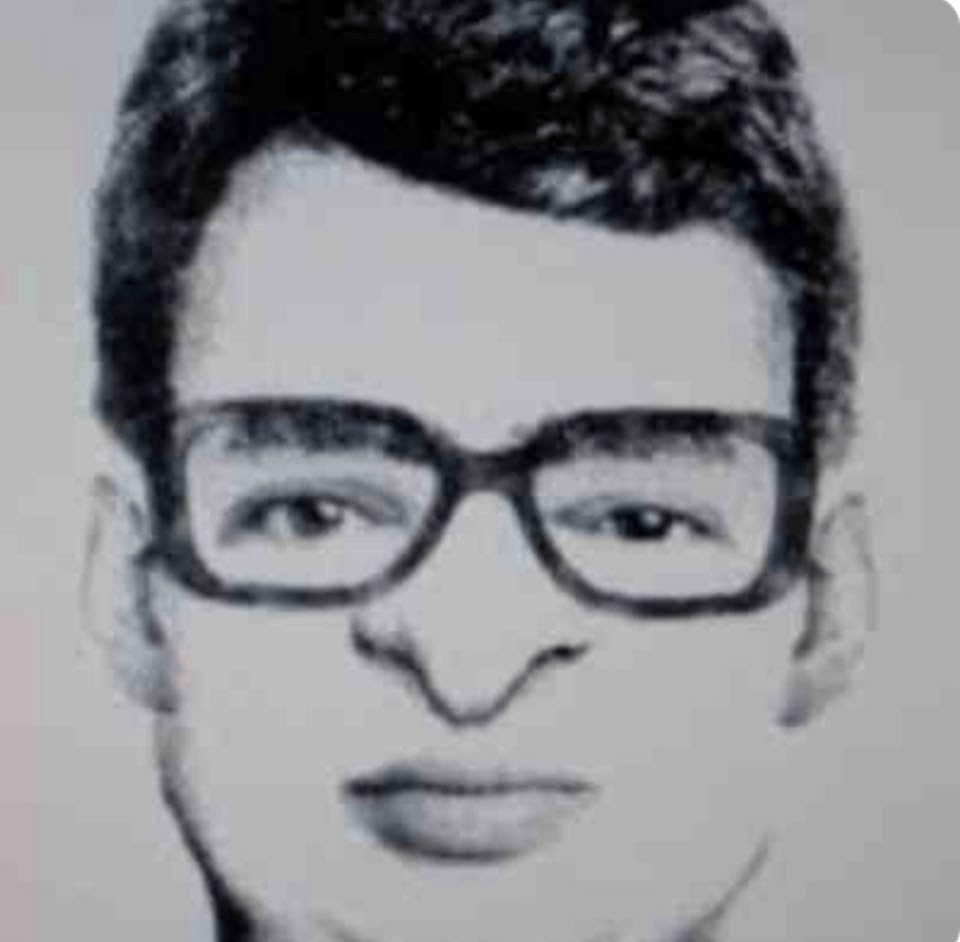
Another unsettling incident reportedly occurred after Kelly’s remains were recovered. An unidentified man visited the Calgary funeral home where her body was being held, claiming to be a friend of the family. He asked to see Kelly, but his request was refused, and he left. The encounter attracted investigative attention because the man’s identity and reasons for visiting were unclear. Although questions remained about whether he had any connection to the murder, no such connection was publicly established.
As the years passed, investigators examined thousands of leads and more than 2,000 potential suspects. Advances in forensic science offered new possibilities, but the central mystery persisted. The man who had arranged the babysitting job had seemingly disappeared as completely as the identity he had used.
Decades later, another name emerged in discussions surrounding Kelly’s murder: Gary Allen Srery, an American serial sexual offender who had lived in Canada under several aliases. In May 2024, Alberta RCMP announced that investigative genetic genealogy had identified Gary as the person responsible for the deaths of four young women in the Calgary area during 1976 and 1977. Those victims were Eva Dvorak, Patricia McQueen, Melissa Rehorek, and Barbara MacLean.
The identification brought renewed attention to other unsolved murders in Alberta, including Kelly’s. In June 2025, Global News reported that Gary’s son, Richard Srery, suspected his father might have been involved in her disappearance. Richard said he had discovered correspondence suggesting that his father had used the name Bill Christensen, the same name given by the man who arranged Kelly’s babysitting job. He also raised questions about his father’s reported connection to the Standard area.
The similarities were troubling, but investigators cautioned against drawing conclusions. The RCMP told Global News that they had no evidence connecting Gary to Kelly’s murder and that their records did not establish that he had used the Christensen alias. Although the possibility attracted considerable public attention, it remained a theory rather than a proven connection.
In October 2026, journalist Nancy Hixt revisited the case in an episode of Crime Beat, examining the possibility that Gary might have been responsible. The program included a recording of his voice that was played for Stacey, the young woman who had received a babysitting request before Kelly’s disappearance. Although her recollections remained important to the investigation’s history, she was unable to positively identify the voice as belonging to the man who had contacted her in 1981.
For Kelly’s family, each new development has carried the difficult combination of hope and uncertainty. Her younger sister, Marnie, has spoken publicly about the lasting impact of the murder and the painful reality of growing older without Kelly. The family has lived through decades of unanswered questions, missed milestones, and the knowledge that someone may still possess information about what happened that April evening.
Kelly was only fifteen years old. She had school, friendships, family, and an entire future ahead of her. Instead, her life became the subject of one of Alberta’s most enduring unsolved homicide investigations. Behind the police files, composite sketches, forensic examinations, and theories is the story of a young girl who trusted that she was going to an ordinary babysitting job and never returned home.
A reward of $100,000 has previously been publicized by the Village of Standard for information leading to the arrest and conviction of Kelly’s killer, although its current availability and conditions should be confirmed with investigators. Anyone who remembers the telephone calls, the vehicle seen at the Cook residence, or an individual using the name Bill Christensen in the Standard area during April 1981 may hold information that could help resolve the case.
The identity of Kelly’s killer remains unconfirmed, and no one has been charged with her murder. Despite the passage of more than four decades, the questions surrounding her final evening have never lost their importance. Who was the man who called the Cook family home? How did he know whom to contact? And what happened after Kelly entered his vehicle?
Somewhere within the events of April 22, 1981, lies the truth about what happened to Kelly Jane Evelyn Cook. Her family has spent a lifetime waiting for that truth to emerge, and her story remains a reminder that the passage of time does not diminish the need for answers, accountability, and justice.
Anyone with information regarding the murder of Kelly Cook is urged to contact the RCMP South Airdrie detachment at 403-420-4900. Information can also be submitted anonymously to Crime Stoppers at 1-800-222-8477 (TIPS).
Sources: Global News reporting by Nancy Hixt, including High Profile Homicide of Alberta Teen Kelly Cook Remains Unsolved After 35 Years (2016), The Story of Kelly Cook: The Backup Babysitter (2019), and What Secrets Did Calgary Serial Killer Gary Srery Take to the Grave? (2025). Additional background comes from Alberta RCMP announcements concerning Gary Allen Srery, coverage by the Drumheller Mail, and the October 2026 Crime Beat episode Documenting a Serial Killer.
🕯️ Subscribe to Someone Saw Something. I dig through the details, ask the unanswered questions, and occasionally fall down research rabbit holes so you don’t have to. 🧡


Leave a Reply