Strathmore, Alberta — A Christmas Day police shooting, an independent investigation that questioned the use of deadly force, and a decision not to prosecute have left troubling questions about the death of a 39-year-old Siksika Nation father.
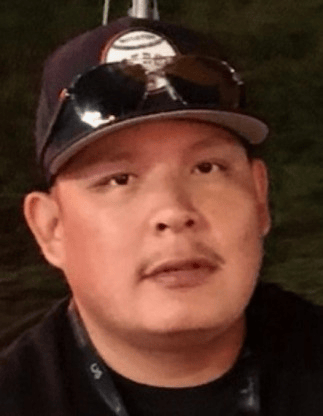
Christmas Day is supposed to be a time for families to gather, celebrate, and make memories together. But on December 25, 2022, one Alberta family experienced a tragedy that would forever change their lives. Nathan Jacobson Leather, a 39-year-old father, hockey coach, and member of Siksika Nation, died after being shot multiple times by RCMP officers outside a gas station in Strathmore, Alberta.
Nearly three years later, an independent police investigation would reveal disturbing details about the circumstances of Nathan’s death. Investigators determined that while the officers’ initial use of deadly force was justified, the subsequent gunfire raised sufficient concerns about possible criminal conduct to refer the case to Crown prosecutors.
Despite those findings, no criminal charges were laid.
Nathan was more than the man described in police reports. Born on June 2, 1983, he was known by the traditional names Miinoiyii, meaning Berryeater, and Kahoapii, meaning Never Sits. He was a father, partner, relative, friend, and respected member of his community. Hockey played an important role in his life, both as a player and as a coach who helped mentor younger athletes. In 2017, he received Siksika’s first Coach of the Year award, reflecting his dedication to the sport and the young people who looked up to him.
Those who knew Nathan remembered his humour, his protective nature, and the love he had for his family. His longtime partner, Amanda Duck Chief, their children, and the extended family who loved him were left to grieve a death that would later become the subject of serious questions about police accountability.
In the early morning hours of December 25, 2022, at approximately 3:40am, Strathmore RCMP received a call from an employee at a Husky gas station on Ridge Road. The employee reported that an intoxicated man was inside the business and refusing to leave. According to information later documented by the Alberta Serious Incident Response Team (ASIRT), the employee indicated that the man did not initially appear violent.
When officers arrived, they encountered Nathan inside the gas station. For approximately 40 minutes, police attempted to persuade him to leave. The situation eventually escalated when officers attempted to place him under arrest.
A conducted energy weapon, commonly known as a Taser, was deployed but proved ineffective. During the confrontation, Nathan picked up a hammer from the store’s automotive supplies. Rather than immediately using it against the officers, he began striking himself in the head.
The situation had become dangerous, but it also involved a man who was visibly harming himself.
Nathan subsequently left the gas station carrying the hammer. Additional officers had arrived, and police vehicles were positioned outside the business. As Nathan approached one of those vehicles while holding the hammer and refusing police commands, an officer fired five shots.
ASIRT would later determine that this initial burst of gunfire was reasonable, necessary, and proportionate under the circumstances. Investigators concluded that the officer faced an immediate threat from an armed man approaching his position.
What happened next, however, became the central issue in the investigation.
Nathan had been shot and was seriously injured, yet the encounter continued. Approximately 12 seconds after the first shots, the same officer fired again as Nathan attempted to rise from the ground.
Despite his injuries, Nathan continued trying to stand and move toward the police vehicle. At one point, he was hopping on one leg because gunfire had fractured his right leg in three places. The officer fired additional shots as Nathan continued moving toward the vehicle and failed to comply with commands to remain on the ground.
More gunfire followed as Nathan reached the vehicle door.
During the final burst, two officers discharged their firearms as Nathan moved toward the police vehicle. By the time the shooting stopped, at least 20 shots had been fired in five separate bursts over approximately 34 seconds.
Nathan had sustained multiple gunshot wounds.
One of the most significant details to emerge from the investigation involved another officer who had not fired at Nathan. As the encounter reached its final moments, that officer could be heard on police vehicle recording equipment saying:
“I’m going to go in. Hang tight. He’s been shot enough.”
The officer then approached Nathan, removed the hammer from his hand, and threw it aside.
Those words would become especially significant when investigators examined whether the continued use of deadly force had been necessary.
Nathan died from his injuries.
The circumstances surrounding his death prompted an investigation by ASIRT, Alberta’s independent agency responsible for examining serious incidents involving police officers, including deaths, serious injuries, and allegations of criminal misconduct.
Investigators examined the evidence, including police recordings, witness accounts, the officers’ actions, and the sequence of events leading to Nathan’s death.
Their findings, made public on October 8, 2025, drew an important distinction between the initial shooting and the gunfire that followed.
ASIRT’s acting executive director, Matthew Block, concluded that the first five shots were justified because Nathan was armed with a hammer, approaching an officer, and refusing commands.
However, investigators questioned whether the same justification continued to exist as Nathan became increasingly injured and less mobile.
The circumstances were changing with each successive burst of gunfire. Nathan’s injuries were severe, additional officers were arriving, and the available options for responding to the situation were evolving.
ASIRT determined that the subsequent use of force warranted consideration of criminal charges against two RCMP officers, one associated with the Chestermere detachment and the other with the Gleichen detachment.
The findings raised the possibility that some of the gunfire exceeded what was reasonably necessary to address the threat Nathan posed.
The investigation was referred to the Alberta Crown Prosecution Service for review.
However, Crown prosecutors reached a different conclusion about whether the evidence could support a successful criminal prosecution. After reviewing the circumstances and the laws governing police use of force, prosecutors determined that they could not prove beyond a reasonable doubt that the officers had used excessive force.
As a result, no criminal charges were laid.
The decision did not mean that ASIRT had found every shot justified. In fact, the independent investigation had expressly questioned the necessity of the later gunfire. Rather, the Crown concluded that the available evidence did not meet the legal standard required to pursue criminal charges with a reasonable likelihood of conviction.
That distinction is central to understanding Nathan’s case.
Canadian police officers are legally permitted to use reasonable and necessary force when responding to dangerous situations, including deadly force when legally justified. However, the justification for force must be assessed in light of the circumstances at the time it is used. An initial threat does not automatically establish that every subsequent use of force is necessary or proportionate.
In Nathan’s case, investigators identified a critical question: At what point, if any, did the continued shooting cease to be a necessary response to an immediate threat?
The fact that Nathan was carrying a hammer cannot be ignored. Nor can the fact that he had already sustained serious injuries, was struggling to remain standing, and was moving with a badly fractured leg.
The officer’s recorded statement that Nathan had already been shot enough raises another difficult question. If one officer believed it was possible to approach Nathan and remove the hammer without firing additional shots, could a different response have been taken earlier?
The statement alone does not establish criminal wrongdoing. Nevertheless, it is an important part of the evidence and helps explain why the later gunfire attracted scrutiny.
The distinction between justified force and excessive force is not simply a matter of counting bullets. It involves examining the threat, the officers’ perceptions, Nathan’s actions, the available alternatives, and whether each use of deadly force remained reasonable as the situation changed.
Yet the number and timing of the shots remain deeply troubling aspects of the case.
At least 20 shots were fired at a man who became progressively more seriously injured during an encounter lasting just over half a minute. An independent police oversight investigation concluded that the later stages of that shooting raised concerns serious enough to warrant consideration of criminal charges.
For Nathan’s loved ones, the decision not to prosecute meant that those concerns would not be examined in a criminal trial.
Nathan’s death also raises broader questions about how police respond to people experiencing intoxication, emotional distress, or self-harming behaviour. While the presence of a weapon can create an immediate danger, encounters involving people in crisis require difficult decisions about de-escalation, intervention, and the use of force.
The circumstances surrounding Nathan’s death illustrate how quickly such an encounter can become fatal, and why independent scrutiny of police actions is essential.
There is also the question of what accountability means when an oversight agency identifies potentially criminal conduct but prosecutors decline to pursue charges.
A decision not to prosecute is not an acquittal. The officers involved have not been found criminally guilty, but neither did a criminal court examine the evidence and determine whether the later gunfire was justified.
The possibility of further legal scrutiny is not necessarily extinguished. Depending on the circumstances, a family may seek legal advice about requesting reconsideration of a prosecution decision, exploring a fatality inquiry, or pursuing other available legal remedies. Whether any such avenues remain available in Nathan’s case would require assessment by an Alberta lawyer familiar with police accountability and applicable deadlines.
As of October 2026, the latest substantive publicly verified outcome remains the October 2025 decision not to prosecute the officers. No subsequent criminal charges in connection with Nathan’s death were identified in the sources reviewed for this article.
Behind the investigation, legal arguments, and questions about excessive force is the loss of a human life.
Nathan was a father whose children would grow up without him, a partner whose absence would be felt every day, and a hockey coach whose influence extended to the young people he encouraged and mentored. He had a family, a community, and a future that ended in the early hours of Christmas morning.
His death should not be reduced to the fact that he was intoxicated or holding a hammer. Those circumstances are important to understanding the police response, but they do not define who Nathan was, nor do they eliminate the need to examine whether the force used against him was lawful and necessary.
The central questions remain difficult to dismiss. Why did the shooting continue after Nathan had been seriously wounded? Could the officers have used a different approach as his ability to move became increasingly limited? And why did independent investigators believe the later gunfire warranted consideration of criminal charges while Crown prosecutors concluded that the evidence was insufficient?
Those questions deserve careful examination, not assumptions about guilt or innocence.
Nathan Jacobson Leather died on December 25, 2022, after being shot at least 20 times by RCMP officers during an encounter that lasted approximately 34 seconds. Alberta’s independent police watchdog questioned the justification for the later gunfire, yet no officers were criminally charged.
For the family who lost him, and for a community that remembers him as far more than the circumstances of his death, the absence of criminal charges does not erase the questions raised by the investigation.
Nathan’s life mattered before the shooting. The circumstances of his death deserve to be remembered and examined with the same seriousness.
Sources: The Alberta Serious Incident Response Team (ASIRT), whose investigation report into the fatal police shooting of Nathan Jacobson Leather was released on October 8, 2025, through the Alberta Police Review Commission; CBC News, which reported on the investigation’s findings and the Crown’s decision not to prosecute the officers involved; CityNews Calgary, which published “No charges for RCMP officers in fatal Strathmore shooting, despite ASIRT findings” on October 8, 2025; The Media Co-op, which documented Nathan’s death and the initial response from Siksika Nation; and Nathan’s published obituary and memorial tributes, which provided biographical information about his life, family, and contributions to his community.
🕯️ Subscribe to Someone Saw Something. I dig through the details, ask the unanswered questions, and occasionally fall down research rabbit holes so you don’t have to. 🧡


Leave a Reply