On the evening of May 18, 1962, 23-year-old Alexandra Wiwcharuk left her apartment in Saskatoon’s City Park neighbourhood to mail two letters and enjoy a walk along the South Saskatchewan River before reporting for her nursing shift at City Hospital.
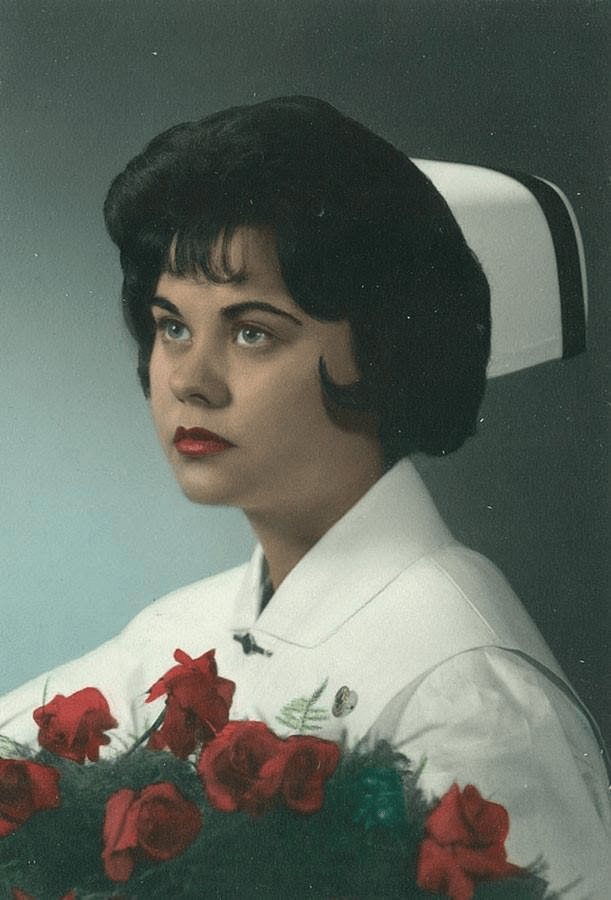
It was a warm spring evening, and Alexandra had every reason to expect she would return home.
Instead, she disappeared.
Thirteen days later, on May 31, 1962, her body was discovered in a shallow grave along the riverbank near Spadina Crescent and 33rd Street, not far from the place where she had last been seen.
Alexandra had suffered a fractured skull and had been sexually assaulted. Investigators determined that her official cause of death was suffocation.
Her murder shocked Saskatoon, devastated her family, and began an investigation that has remained unresolved for more than 64 years.
Alexandra, affectionately known as Alex, was more than the victim of a terrible crime. She was a young nurse with a promising future, a beloved member of a large family, and a woman whose warmth and personality had made her well known in her community.
Born in 1939, Alexandra grew up in Saskatchewan in a Ukrainian Canadian family. She trained at the Yorkton Union Hospital School of Nursing, graduating in 1961, and later moved to Saskatoon to work at City Hospital.
She was remembered as outgoing, friendly, and full of life.
In 1960, Alexandra had been selected as queen of Yorkton’s Kinette Skating Carnival and represented the community in a provincial beauty contest.
The following year, she became known as “The Girl in Saskatoon” after winning a promotional contest connected to a Johnny Cash concert. During the performance, Cash sang his song of the same name to Alexandra before an audience of approximately 1,500 people.
It was a memorable moment in the life of a young woman who had already accomplished so much.
By May 1962, Alexandra was sharing an apartment with three other nurses in Saskatoon’s City Park neighbourhood. She was working toward her future, surrounded by friends and colleagues, and had plans to report for her shift at the hospital later that night.
On Friday, May 18, she left the apartment at approximately 8:00pm.
According to historical accounts, Alexandra told her roommates that she intended to mail letters and take a walk before work.
She was reportedly seen at Mead’s drugstore between approximately 8:30 and 8:45pm. Later, a group of boys fishing along the riverbank reportedly saw her sometime between 9:00 and 9:45pm.
Those sightings helped establish a timeline of her final known movements.
But Alexandra never returned to her apartment.
She also failed to report for her scheduled nursing shift.
Her disappearance prompted an extensive search, and when her body was discovered thirteen days later, the investigation became a homicide inquiry.
The discovery was particularly devastating because Alexandra had been found close to the area where she had disappeared.
Her remains were located in a shallow grave near the South Saskatchewan River, in an area that had been the focus of searching after she vanished.
For investigators, the scene presented evidence of a violent attack.
Alexandra had been struck with sufficient force to fracture her skull and had been sexually assaulted. She had then been buried, and the medical findings established suffocation as the cause of death.
The circumstances made clear that someone had deliberately taken her life.
But the identity of that person remained unknown.
Saskatoon police launched an extensive investigation, interviewing witnesses, examining evidence, and following leads throughout Saskatchewan and beyond.
Historical accounts indicate that dozens of possible suspects were investigated during the months following Alexandra’s murder, while additional individuals were examined through RCMP inquiries.
Yet no one was charged.
As the years passed, the investigation continued, but the answers Alexandra’s family desperately wanted remained out of reach.
Her case became one of Saskatoon’s most enduring unsolved homicides.
For those who knew Alexandra, the passing years did not diminish the loss.
Among the people deeply affected was Canadian author Sharon Butala, who had attended high school with Alexandra.
Decades after the murder, Butala revisited the case in her book The Girl in Saskatoon: A Meditation on Friendship, Memory and Murder.
The book explored Alexandra’s life, the circumstances surrounding her death, and the lasting impact of an unsolved murder on the people who knew her.
Alexandra’s story also became the subject of television documentaries, including CBC’s The Fifth Estate, which examined the historical investigation and the efforts to identify her killer.
These projects helped introduce her story to new generations of Canadians.
But perhaps the most persistent efforts to uncover the truth have come from Alexandra’s own family.
Her nieces, including Patty Storie, Lorain Phillips, Lynn Gratrix, and Gwen Taralson, have spent years researching her murder, following leads, speaking with potential witnesses, and working to ensure that the investigation remains in the public eye.
Their efforts became widely known through the family’s Justice for Alex campaign.
Over the years, the family has publicly discussed information they believe may be relevant to the case, including accounts concerning people and vehicles reportedly seen near the riverbank on the evening Alexandra disappeared.
These accounts have generated renewed interest, but they have not resulted in a publicly confirmed identification of her killer.
Some family members have also expressed concerns about aspects of the original investigation.
Those concerns are part of the case’s history, but allegations concerning investigative failures or misconduct should not be mistaken for established findings.
What remains certain is that Alexandra’s family has continued searching for justice.
In 2004, her remains were exhumed as investigators sought additional forensic evidence.
Advances in forensic science, particularly DNA technology, have provided new investigative possibilities in historical homicide cases.
Saskatoon police have confirmed that DNA testing has been used in Alexandra’s investigation as technology became available.
In May 2022, on the 60th anniversary of her disappearance, the Saskatoon Police Service issued a renewed public appeal.
Police confirmed that hundreds of people had been interviewed and countless leads pursued over the decades. They also stated that the investigation remained active and that investigators continued to maintain contact with Alexandra’s family.
Another appeal followed in May 2024, when police again asked anyone with information to come forward.
Despite the passage of more than six decades, investigators emphasized that even a seemingly small detail could prove useful.
The continued appeals are important because Alexandra’s murder occurred in a public area during an evening when other people were reportedly walking, fishing, and spending time near the river.
Someone may have seen an interaction that seemed unremarkable at the time.
Someone may remember a person or vehicle near the riverbank on May 18, 1962.
Others may have heard conversations in the days, weeks, or years following Alexandra’s death that were never shared with investigators.
The publicly available information does not establish who attacked Alexandra or whether anyone witnessed the crime.
However, any firsthand knowledge concerning activity near the riverbank that evening deserves to be brought to the attention of police.
The passage of 64 years creates obvious challenges.
Many people who were adults in 1962 are now elderly, and some have died. Memories have faded, neighbourhoods have changed, and people who once lived in Saskatoon may have moved elsewhere.
Yet information may still exist.
Someone may have preserved an old letter, photograph, journal, or personal record. A family member may remember a conversation about Alexandra’s murder that was never reported.
A person who was reluctant to speak decades ago may now feel comfortable coming forward.
Even information that has been passed down through a family may help investigators identify someone with more direct knowledge.
It is important that anyone sharing information distinguish between what they personally witnessed and what they heard from someone else.
After so many years, careful attention to accuracy is essential.
Alexandra’s murder has also attracted theories and speculation, particularly because of the violence involved and the length of time the case has remained unsolved.
But speculation cannot replace evidence.
There is no publicly confirmed identification of her killer, and no individual should be accused without reliable evidence.
The focus must remain on establishing what happened and bringing any credible information to investigators.
Alexandra was only 23 years old.
She had completed her nursing education, begun her career, and built a life in Saskatoon. She had friends, family, and opportunities ahead of her.
Her life should not be remembered solely for the circumstances of her death.
She was the young woman who loved music, who had been celebrated in her community, and who cared for others through her work as a nurse.
Her family has spent decades ensuring that the world remembers those parts of her life.
As we look back on May 18, 1962, we are asking anyone who has information about Alexandra Wiwcharuk’s murder to come forward.
If you lived in Saskatoon during that period, particularly near City Park, Spadina Crescent, 33rd Street, or the riverbank near the weir, please consider whether you remember anything relevant.
If you knew Alexandra, worked with her at City Hospital, or were familiar with the people she spent time with, any firsthand information may be important.
If you remember hearing something about the crime that was never reported, please share it with investigators.
And if you have information about people or vehicles near the riverbank on the evening of May 18, 1962, please do not assume that someone else has already provided it.
The Saskatoon Police Service continues to seek information concerning Alexandra’s murder.
Anyone with information is encouraged to contact the Saskatoon Police Service at 306-975-8300.
Anonymous tips may also be submitted through Crime Stoppers at 1-800-222-TIPS (8477).
Please share Alexandra’s story, particularly with families who lived in Saskatoon during the early 1960s and those who may remember the circumstances surrounding her disappearance.
On May 18, 1962, Alexandra Wiwcharuk left her apartment for a walk along the South Saskatchewan River.
She was 23 years old.
She had letters to mail and a nursing shift to attend.
She never made it home.
Thirteen days later, her body was found buried along the riverbank.
More than 64 years have passed, but the person responsible has never been publicly identified or brought to justice.
Alexandra deserves more than to be remembered as the victim of an unsolved murder.
She deserves justice.
Her family deserves answers.
And anyone who possesses information about that May evening in 1962 has an opportunity to help resolve a case that has haunted Saskatoon for generations.
Someone saw something. Someone heard something. Someone knows something.
Please help bring justice for Alexandra Wiwcharuk.
Sources: Saskatoon Police Service, “Unsolved Homicide – Alexandra Wiwcharuk,” May 18, 2022; CJWW Radio, “Saskatoon Police Seek New Tips on Historical Homicide of Alexandra Wiwcharuk,” May 16, 2024; Library and Archives Canada, Death of a Beauty Queen, CBC The Fifth Estate documentary collection; University of Saskatchewan, “Acclaimed Author, U of S Alumna Sharon Butala Publishes First Mystery Novel,” May 17, 2018; Sharon Butala, The Girl in Saskatoon: A Meditation on Friendship, Memory and Murder; Global News/The StarPhoenix, “Sisters Pursue Leads in Aunt’s 1962 Murder,” May 27, 2010; Justice for Alex, family campaign and historical case information.
🕯️ Subscribe to Someone Saw Something. I dig through the details, ask the unanswered questions, and occasionally fall down research rabbit holes so you don’t have to. 🧡


Leave a Reply