On September 15, 1978, 20-year-old Wayne Kevin Spark left his home in Richmond, British Columbia. He was supposed to attend Vancouver Community College that day. Wayne never arrived. Nearly five decades later, there is still no publicly documented explanation for what happened after he left home.
Wayne was born in 1958. At the time of his disappearance, he was six feet tall and weighed approximately 159 pounds. He had a slender build, fair complexion, blond hair and blue eyes. One identifying feature was a four-inch scar on his right arm. He was wearing black pants and a maroon sweater when he disappeared.
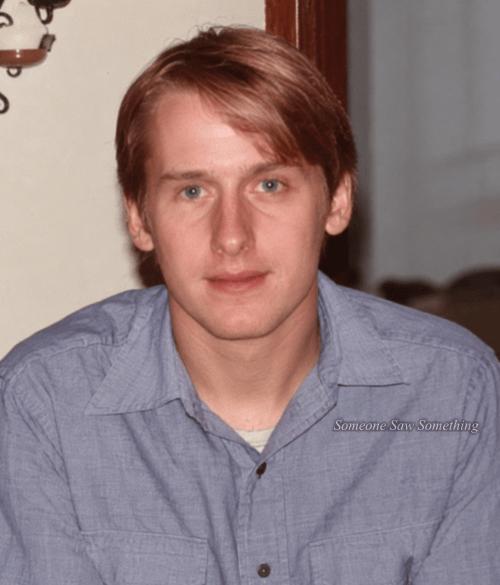
The official description of Wayne’s final known day is remarkably brief. According to Canada’s Missing, Wayne left home to attend Vancouver Community College but never showed up. He has not been seen or heard from since.
That simple statement leaves one particularly important distinction. Wayne was not last seen at the college. There is no indication in the public record that he reached Vancouver at all. His last known location was Richmond, and Vancouver Community College was his intended destination.
Somewhere after leaving home, Wayne’s trail disappeared.
Even determining how Wayne intended to make the trip has proven difficult. The publicly available RCMP information does not mention a vehicle. There is no make or model of a car, licence plate or abandoned vehicle associated with the case. But the record doesn’t say that Wayne was travelling by bus or other public transportation either.
Without knowing how he was travelling, it is impossible from the public information to reconstruct a reliable route between his home and the college.
There is another unanswered question: which Vancouver Community College location was Wayne intending to attend?
The current federal record simply says Vancouver Community College. It doesn’t identify a campus, a program or the classes Wayne was taking. Without contemporary college records or information from the original police investigation, assigning him a particular campus would be speculation.
Even the time Wayne left home isn’t included in the public record.
We don’t know who last saw him there. We don’t know whether he was carrying textbooks or a school bag. We don’t know whether he had money with him, whether someone was expecting to meet him, or whether attending college that day was part of his normal routine.
And there does not appear to be a publicly documented sighting of Wayne after he left.
There is no confirmed report of him at a bus stop. No publicly identified witness saw him getting into a vehicle. There is no known sighting at Vancouver Community College. There is no publicly documented transaction or other activity that places him somewhere else later that day.
From everything that has been made publicly available, Wayne’s trail effectively ends at home.
That makes the wording “disappeared on his way to college” slightly misleading. It suggests we know Wayne actually began that journey and disappeared somewhere along the route.
What we really know is that he left home intending to attend college and never arrived.
Where he went after leaving is unknown.
There is equally little public information explaining what might have been happening in Wayne’s life before he vanished. There is no publicly documented indication that he was planning to leave Richmond, packing belongings, withdrawing money or telling friends or family that he wanted to disappear.
That doesn’t mean investigators found no such evidence. It means none appears in the surviving public case information.
The same caution applies to the possibility of foul play.
There is no publicly identified suspect or person of interest in Wayne’s disappearance. The case has not publicly been classified as a homicide, and I could find no credible evidence connecting Wayne to a known offender or criminal investigation.
There is also no publicly available evidence establishing that Wayne died accidentally or took his own life.
Almost every possible explanation remains open – not because there is evidence supporting all of them, but because so little evidence has ever been released publicly.
A disappearance in 1978 also presented investigators with challenges that are difficult to imagine today. There were no cellphone location records, text messages, GPS histories or widespread networks of security cameras. There was no digital trail capable of automatically showing where Wayne travelled after leaving his home.
If he boarded a bus and nobody remembered him, there may have been little evidence that he had ever been aboard.
If someone picked him up, investigators needed a witness who saw the encounter.
If he changed his plans and went somewhere other than college, there was no smartphone quietly recording that decision.
And if something happened shortly after he left home, the window for reconstructing those movements could have been extremely small.
Despite the lack of information available today, Wayne has not been completely forgotten.
In June 2026, someone posted about Wayne’s disappearance while attempting to bring renewed attention to his case. The person explained that an uncle had grown up in the same church community as Wayne in the Vancouver area and had remembered his disappearance for more than 50 years.
That account provides an interesting glimpse of the effect Wayne’s disappearance had on people who knew him or knew of him, but it doesn’t solve the gaps in the timeline.
When people asked the poster whether Wayne owned a car or used public transportation, the person acknowledged that they were not in contact with anyone who had actually seen Wayne that day and could not say how he travelled.
That is an important distinction because speculation that Wayne drove to college has circulated online. There is currently no reliable evidence establishing that he did.
The reference to Wayne’s church community potentially offers another avenue for investigation, but the church itself has not been reliably identified in the material I could locate. Attempts to connect Wayne with people sharing his surname in historical Vancouver-area church records also produced nothing that could responsibly be presented as a family connection.
His family is another major blank in the publicly accessible story.
The federal missing-person record doesn’t identify Wayne’s parents or siblings. Searches of accessible genealogical, newspaper and community material haven’t produced a family relationship that can confidently be tied to him. Without those names, searching older newspaper indexes becomes considerably more difficult.
I also looked for reports that Wayne’s belongings had eventually been found. None surfaced.
There is no publicly documented recovery of his wallet, identification, clothing, school materials or other personal property. Nor could I find reliable documentation of unidentified remains that have specifically been compared with and excluded as Wayne.
I also couldn’t verify whether investigators currently have a family DNA reference available for comparison with unidentified remains.
Those details may exist in the police file without having been made public.
And that police file may contain considerably more than we know.
Richmond RCMP still identifies Wayne’s investigation under case number 1978-21796. The original file could potentially contain statements from his parents, relatives, friends and classmates; his home address; his intended college campus; his normal method of transportation; searches conducted after he vanished; and possible sightings investigators received.
None of that appears in the current public summary.
I also searched specifically for contemporary newspaper coverage. Searches using Wayne Kevin Spark, Wayne Spark, Kevin Spark, Richmond, Vancouver Community College, September 1978 and his police case number did not uncover a publicly indexed original article about his disappearance.
That doesn’t necessarily mean newspapers never reported the case.
Historical issues of the Vancouver Sun and The Province exist in archival collections, along with indexes and clipping collections covering 1978, but much of that historical material isn’t freely searchable through the ordinary web. A short missing-person article could therefore exist in a newspaper archive or on microfilm without appearing in a modern internet search.
Nearly 48 years later, Canada’s Missing continues to list Wayne Kevin Spark as missing.
If alive, Wayne would now be approximately 68 years old and perhaps the most haunting aspect of his disappearance is how little is required to tell everything publicly known about his final day.
A 20-year-old college student left his Richmond home on September 15, 1978.
He intended to attend Vancouver Community College.
He never arrived.
No confirmed trace of him has been publicly documented since.
We don’t know whether Wayne drove away from home, stepped onto a bus, accepted a ride or changed his plans entirely. We don’t know whether he ever crossed from Richmond into Vancouver. We don’t even know exactly where he was heading beyond the name of the college.
There is therefore no documented point along a journey where Wayne’s trail suddenly stops.
His trail begins – and apparently ends – with him leaving home.
Somebody may still remember something that seemed insignificant in 1978: seeing Wayne waiting for transportation, hearing him mention plans for that day, knowing how he normally travelled to school, or remembering someone he intended to meet.
After almost half a century, even one of those details could help fill in the first missing piece of Wayne’s story.
If you have information on Wayne’s case, please contact any of the following:
Richmond RCMP: 604-278-1212
Reference Case#: 1978-21796
Canada’s Missing Case reference: 2014003981
Crime Stoppers: 1-800-222-TIPS(8477)
Online at: https://www.canadiancrimestoppers.org/submit-a-tip/submit-a-tip
Crime Stoppers provides anonymous tipping
Send email to the National Centre for Missing Persons and Unidentified Remains at: canadasmissing-disparuscanada@rcmp-grc.gc.ca
Sources: Canada’s Missing , Richmond RCMP case information, Vancouver Public Library historical newspaper and archival collection information, historical Vancouver-area archival records, and recent community efforts to renew attention to Wayne Kevin Spark’s disappearance. Searches were also conducted for contemporary newspaper reporting, family information, transportation details, Vancouver Community College records, later sightings and unidentified-person comparisons, no reliable publicly accessible documentation was located that could establish those details.

🕯️ Subscribe to Someone Saw Something. I dig through the details, ask the unanswered questions, and occasionally fall down research rabbit holes so you don’t have to. 🧡
 Someone Saw Something
Leave a comment