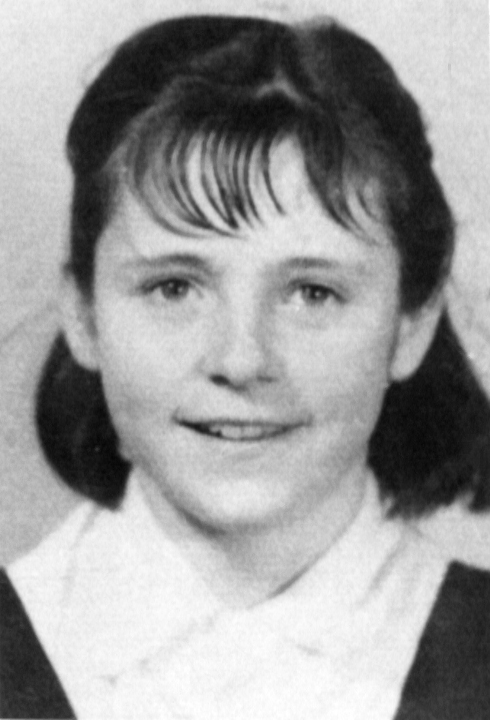
On the night of September 14, 1963, 13-year-old Noreen Anne Greenley left a friend’s home in Bowmanville, Ontario, intending to take a bus home. She never arrived. For decades, her disappearance centred on a mysterious blue car seen near the bus stop that night. Sixty years later, police revealed an entirely different trail – one even suggesting Noreen may have survived, travelled to the United States and possibly had a child.
But neither trail has led investigators to Noreen.
Noreen was born on May 16, 1950, and was one of seven children born to Harvey and Nadine Greenley. Family accounts describe her as an active, vibrant teenager who enjoyed bowling, baseball, skating, horseback riding and baking.
Saturday, September 14, 1963, began as an ordinary evening out. Noreen spent time with her friend Bonnie Wilkins and Bonnie’s boyfriend, Gary Woolner. The three went bowling at the Liberty Bowl in Bowmanville and later stopped for something to eat before eventually returning to Bonnie’s home near Waverly Road and Highway 2.
At approximately 11:00pm, Noreen left. She intended to catch the bus home from the stop across the street, but she never boarded it. The bus driver was later questioned, and the available accounts indicate Noreen was not at the stop when the bus arrived. Somewhere between leaving Bonnie’s home and the arrival of that bus, Noreen’s trail disappeared.
But there may have been a witness.
A man travelling through the area reportedly noticed a young girl waiting near the bus stop. When he passed the location again a short time later, he saw what appeared to be the same girl getting into a small car.
The vehicle would become one of the enduring mysteries of Noreen’s case.
It was described as a small blue car, believed to have been a 1957–1959 Ford Prefect in unusually good condition. MissingKids Canada continues to include the vehicle in Noreen’s official missing-child information.
According to accounts preserved by Noreen’s family, something even more troubling may have happened later that night.
Noreen’s sister Joyce and a friend reportedly encountered a similar-looking vehicle near the Greenley family home. Joyce believed she heard a scream coming from the car and thought the voice could have belonged to Noreen. Noreen’s father and brother reportedly went looking for the vehicle but couldn’t find it. Whether Noreen was actually inside that car has never been established.
The following hours turned into days, and searches began. Employees from local companies joined search efforts, police followed leads, and the Greenley family desperately tried to determine where Noreen had gone. Nothing brought her home.
For decades, the mysterious car remained at the centre of the case. If the girl seen entering it was Noreen, who was driving? Did she know the person behind the wheel? Did she enter willingly? And was it the same vehicle Noreen’s sister later believed she encountered?
Those questions eventually led investigators underground.
In 2018, Durham Regional Police excavated property near Highway 57 and Concession Road 8, near Enniskillen, after receiving information suggesting a vehicle possibly connected to Noreen’s disappearance had been buried there.
The operation was extensive. Police dug two trenches, approximately 45 metres and 30 metres long and about two metres deep, and used metal-detection equipment capable of penetrating even farther below the surface.
They found no evidence connected to Noreen.
The lead had partly originated with information from a man who believed his deceased father may have been involved in Noreen’s disappearance. Reports surrounding the tip became tangled with rumours of a deathbed confession, but police clarified that there had been no confession by the man’s father that he murdered Noreen.
Once again, a promising lead had produced no answer.
Then, in September 2023, on the 60th anniversary of Noreen’s disappearance, Durham Regional Police revealed something the public had never heard before.
It completely changed the way the case could be viewed.
According to police, Noreen’s father Harvey approached investigators in 1968—five years after his daughter vanished—and told them something extraordinary.
Noreen had not disappeared.
She had left home.
For years, investigators apparently lacked enough independent information to substantiate Harvey’s account. He died shortly after providing it, severely limiting the opportunity to determine exactly what he knew and, perhaps more importantly, how he knew it.
Decades later, investigators examining old notebooks belonging to Bowmanville police officers found information they said corroborated portions of what Harvey had reported.
One entry concerned two girls staying in Oshawa. One of them was reportedly pregnant and she was afraid to go home.
The girls were never located.
Police began considering the possibility that the pregnant girl was Noreen.
From there, an astonishing possible journey emerged. According to the information Noreen’s father provided and the historical material later examined by investigators, Noreen may initially have travelled to Oshawa, where she remained for approximately two weeks.
She may then have gone to Whitby. There, she reportedly stayed for approximately three weeks with a couple named Mary and Gary Benson. Police have publicly appealed for anyone who remembers Mary and / or Gary Benson or knows who they were to come forward.
Then Noreen may have left Canada altogether.
Investigators say Noreen and another unidentified girl may have boarded a 40-foot cabin cruiser named the Mary Bell.
The boat was reportedly owned or operated by a man known as “Franko,” although some reports spell the name “Franco.”
According to the theory, the Mary Bell departed from the Oshawa area and crossed Lake Ontario to Rochester, New York.
From Rochester, Noreen may have continued to Syracuse.
Investigators believe she may have stayed in a motel or a collection of cabins there.
But perhaps the most extraordinary piece of the story concerns the pregnancy.
Police revealed in 2023 that they had received information indicating Noreen was pregnant when she disappeared and later gave birth to a baby boy. No publicly identified child has ever been connected to Noreen.
If that information is accurate, however, Noreen’s son would now be in his early sixties. It raises the possibility that someone living today may have no idea that his mother’s identity could hold the answer to one of Canada’s longest-running missing-child cases.
Police have also released several old telephone numbers connected with the investigation: 781-1373, 925-3654 and 745-9145.
Investigators have been unable to identify the people associated with those numbers and have asked anyone who recognizes them from that era to come forward.
Another name appeared in the historical police material: Bert Quinney.
Publicly available information does not establish who Quinney was or what relationship, if any, he had with Noreen. His name therefore shouldn’t be interpreted as indicating wrongdoing. It is simply another fragment investigators have attempted to understand.
The new information presents a remarkable alternative to the story that had surrounded Noreen’s disappearance for decades.
But it doesn’t necessarily solve the mystery.
There is still the blue Ford Prefect.
There is still the witness who reportedly saw a girl getting into a small car near the bus stop.
There is still Noreen’s sister’s account that she believed she heard Noreen screaming from a similar vehicle later that night.
And there is still no Noreen.
It is even possible that pieces of both versions of the story could be true.
If Noreen deliberately left Bowmanville, she still needed transportation. The girl seen entering the blue car could conceivably have been Noreen getting into a vehicle belonging to someone helping her leave. The fact that she entered a car does not by itself establish an abduction.
On the other hand, the presence of a car doesn’t establish that she left voluntarily either.
And the reported scream remains particularly difficult to explain if Joyce’s recollection was correct and the voice really belonged to her sister.
There is another important problem with describing Noreen simply as a “runaway.”
Noreen was 13 years old.
If investigators’ pregnancy theory is correct, she was a pregnant child who was frightened to return home.
That raises questions extending far beyond why she might have decided to leave.
Who was responsible for her pregnancy? Who knew about it? Who helped a 13-year-old travel between communities? Who arranged for her to stay with adults in Whitby? Who helped her cross an international border? Who was the other girl travelling with her? Who was Franko? And if Noreen eventually gave birth, who helped a teenage girl obtain housing, medical care and support in New York?
Even if Noreen walked away voluntarily on September 14, she could hardly have carried out everything described in the later account entirely by herself.
There is also one question at the centre of the new theory that may be more important than any other:
How did Noreen’s father know?
By 1968, Harvey Greenley apparently possessed enough information to tell police that his daughter had left home rather than simply disappeared.
Did someone contact him? Did one of the people who helped Noreen eventually tell him what had happened? Had Noreen herself contacted someone in the family? Was he given information about her supposed child? Or had Harvey simply come to believe a story that wasn’t actually true?
The publicly released information doesn’t answer those questions.
And Noreen’s family has not treated the 2023 theory as the definitive solution.
Her niece Mandy Jones said Noreen’s case had gone in many directions over the previous 60 years and that the family wanted every avenue explored – including this one.
That distinction matters.
Police now have historical evidence supporting the possibility that Noreen left Bowmanville voluntarily and travelled through Oshawa and Whitby before eventually reaching New York. It is no longer merely an internet theory.
But investigators still have not publicly identified Mary and Gary Benson.
They haven’t identified Franko.
They haven’t conclusively located the Mary Bell.
They haven’t identified Noreen’s alleged travelling companion.
They haven’t publicly identified the baby boy Noreen supposedly gave birth to.
And, most importantly, they haven’t found Noreen.
Her disappearance devastated the Greenley family.
Over the decades, Noreen’s parents and siblings continued hoping for an answer. Her younger sister Shelley later described how profoundly the disappearance affected their mother and father. Both died without learning what happened to their daughter.
Noreen’s nieces have since helped carry the search into another generation.
MissingKids Canada now carries a message from one of them:
Noreen’s parents, brothers and sister all searched for closure during their lifetimes. They never received it.
But the family is still searching.
More than six decades after that September night, Noreen’s case therefore has two very different trails.
One leads to a Bowmanville bus stop.
A young girl waits for a ride home.
A mysterious blue car appears.
The girl gets inside.
And Noreen is never seen again.
The other trail leads east and then south.
A frightened pregnant girl.
Two weeks in Oshawa.
Three weeks in Whitby.
Mary and Gary Benson.
Another unidentified girl.
A 40-foot cabin cruiser called the Mary Bell.
A man called Franko.
A nighttime journey across Lake Ontario.
Rochester.
Syracuse.
And possibly a baby boy.
One trail suggests something terrible may have happened to Noreen shortly after she left her friend’s home.
The other offers an extraordinary possibility:
Noreen Greenley may have survived that night.
Had she survived, Noreen would be 76 years old today.
Perhaps somewhere in New York – or somewhere far beyond it – there is an elderly woman whose life began again at 13 under another name.
Perhaps there is a man in his early sixties who has never known that his mother was once one of Canada’s missing children.
Or perhaps the answer still lies much closer to Bowmanville and the mysterious little blue car that has haunted Noreen’s family since 1963.
Until one of those trails finally leads to her, Noreen Anne Greenley remains missing.
Anyone with information about Noreen, Mary and Gary Benson, the Mary Bell, Franko, Bert Quinney, the historical telephone numbers, or a young girl who may have arrived in the Rochester or Syracuse area as a pregnant Canadian teenager in 1963 is encouraged to contact law enforcement.
If you have information on this case, please contact any of the following:
OPP Ontario Centre for Missing Persons and Unidentified Remains (ONCMPUR) OPP ONCMPUR:
Telephone: 1-877-934-6363 or 1-705-330-4144
Email: opp.isb.resolve@opp.ca
Reference Case#: 20130033OPP
Durham Regional Police Service:
Telephone: 905-579-1520 Ext 5400
Reference Case#: 1963-2112
Canada’s Missing Case reference: 2013000045
Crime Stoppers: 1-800-222-TIPS(8477)
Online at: https://www.canadiancrimestoppers.org/submit-a-tip/submit-a-tip
Crime Stoppers provides anonymous tipping
Send email to the National Centre for Missing Persons and Unidentified Remains at: canadasmissing-disparuscanada@rcmp-grc.gc.ca
Sources: Canada’s Missing, MissingKids Canada and the Canadian Centre for Child Protection, Durham Regional Police Service, Durham Radio News, Durham Post, CityNews Toronto, Global News and Canadian Press reporting, as well as information preserved by Noreen Greenley’s family and the Bring Noreen Home campaign.
 Someone Saw Something
Leave a comment