Susan Anne Siegel was just 21 years old when she climbed into a vehicle on a cold Toronto night in December 1984. By the following morning, she had been found dead miles away. More than four decades later, the identity of the person who killed her remains unknown.
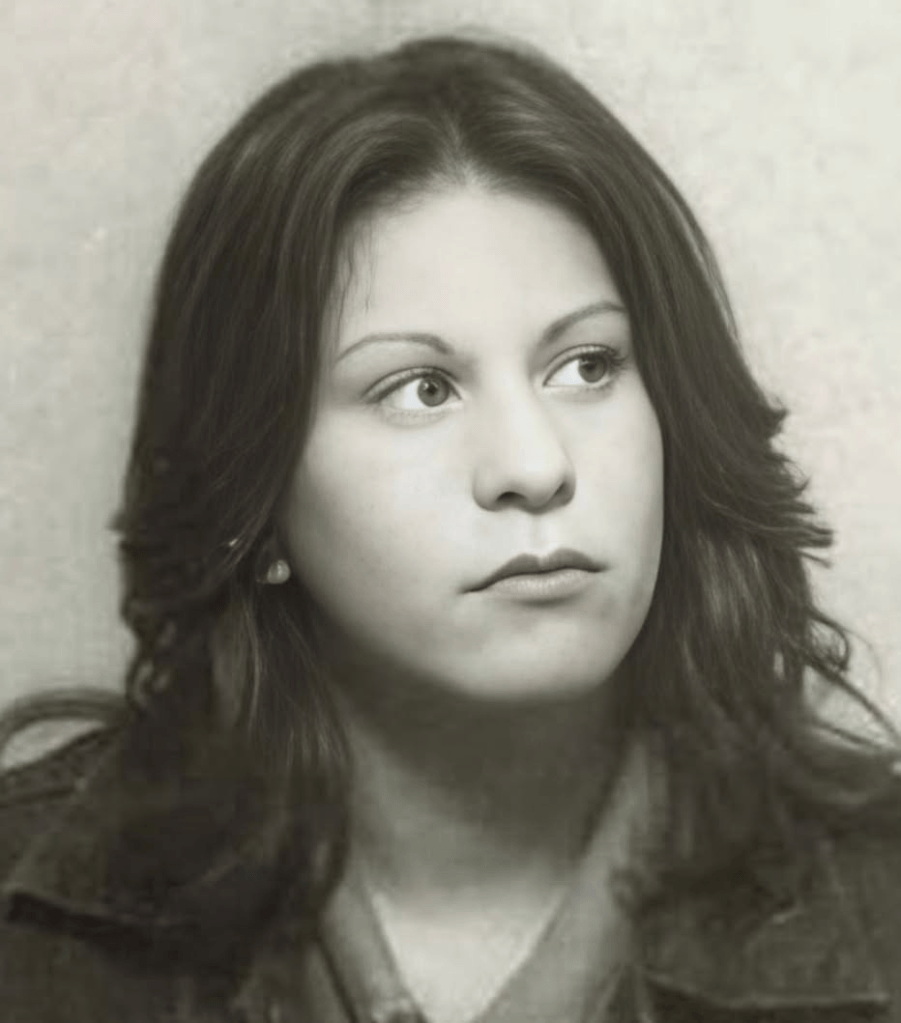
On the evening of Sunday, December 16, 1984, Susan was in downtown Toronto. Toronto Police say her last known sighting occurred at approximately 8:00pm, when she was seen entering a vehicle in the area of Isabella Street and Sherbourne Street. That moment is one of the few firmly established pieces of Susan’s final hours.
Susan was allegedly engaging in survival sex worker at the time. Later reporting has associated her with the Jarvis and Gerrard Street area, while some secondary accounts have also claimed that she was seen leaving a hotel around Queen Street West and Dufferin Street that evening. Those accounts conflict somewhat with the official police chronology, so the Isabella and Sherbourne sighting should be recognized as her last publicly confirmed sighting.
What happened after Susan entered that vehicle is a mystery.
For approximately eleven and a half hours, there is a blank space in the publicly known timeline. We don’t know who was driving the vehicle, where Susan went, whether she knew the person she was with, or what happened between the time she was seen entering the vehicle and the discovery made the following morning.
At approximately 7:30am on Monday, December 17, police responded to an emergency call on Ethel Avenue near Dods Avenue in Toronto’s west end. Susan was discovered outside on the sidewalk suffering from severe trauma. Emergency personnel attempted to save her, but she was pronounced dead at the scene.
Toronto Police’s current cold-case page does not publicly describe Susan’s injuries beyond referring to them as medical trauma. Historical reporting, however, states that Susan had been strangled.
Secondary accounts describe an even more haunting scene. Susan was reportedly found unclothed near railway tracks close to the former Ontario Public Stockyards, in what was then a relatively isolated industrial area. Her clothing was reportedly missing from the scene.
That absence apparently led investigators to consider the possibility that Susan had not been murdered where she was found. Instead, she may have been killed somewhere else before her body was transported to Ethel Avenue and left there.
If that reconstruction is correct, the vehicle Susan entered the previous evening becomes particularly significant.
Historical reporting indicates that investigators were interested in a small truck and a man believed to have been in his late 20s or early 30s. A substantial $50,000 reward was reportedly offered in the hope that someone would come forward with information capable of identifying him.
No arrest followed.
It is important, however, not to turn that unidentified man into a confirmed suspect without stronger evidence. Toronto Police’s current public cold-case profile does not include a description of a suspect, nor does it mention the small truck. Those details survive through secondary historical reporting, so they are better described as leads reportedly pursued during the investigation.
There is another part of Susan’s story that has emerged from an unexpected source.
In an online discussion about Susan’s murder, someone identifying herself as Susan’s niece said that Susan had come to Toronto from Edmonton with a man she had been dating. According to the commenter, her grandmother believed this man may have been exploiting Susan through sex work.
It is potentially important information, but it is unverified family testimony posted online rather than something Toronto Police have publicly confirmed. There is no publicly available evidence establishing that this man was involved in Susan’s death. Still, if the account is genuine, it provides a glimpse into Susan’s life before her murder that is largely missing from the official record.
Susan’s murder becomes even more intriguing when placed alongside several other Toronto cases from the same era.
The names are familiar because some of them overlap with the cases we’ve already examined: Benita “Bonnie” Tarantino, Lilliane Lyle Ford, Lori Pinkus and Donna Oglive.
These women have been grouped together by researchers because all were reportedly involved in survival sex work and were murdered between the mid-1980s and late 1990s. Strangulation has also been reported in connection with these cases, although the publicly available evidence differs considerably from case to case.
Susan was killed in December 1984. Bonnie Tarantino disappeared in September 1985. Lilliane Ford was murdered in September 1990. Lori Pinkus was murdered almost exactly one year later, in September 1991. Donna Oglive was murdered in 1998.
The similarities have inevitably produced one disturbing question.
Was someone hunting sex workers in Toronto?
It is a possibility that deserves discussion, but there is currently no public confirmation from Toronto Police that Susan’s murder was committed by the same person responsible for any of the others. Similar victim circumstances, strangulation and the movement or disposal of victims can indicate a pattern, but they cannot establish a common offender by themselves.
And Donna Oglive’s case provides an important caution against assuming all of these murders were connected.
Decades after Donna was killed, investigators used DNA and investigative genetic genealogy to identify Ronald Gordon Ackerman as the man they allege murdered her. Ackerman was arrested in 2025 and charged with first-degree murder. Because his case has not resulted in a conviction, he remains the accused. His identification nevertheless demonstrates how modern forensic techniques can separate cases that once appeared to belong to a broader pattern – or potentially reveal connections investigators couldn’t see at the time.
Susan’s case may also contain forensic evidence capable of producing answers.
A 2022 Toronto Sun report discussing Toronto cold cases included Susan’s murder while examining the potential of DNA and investigative genetic genealogy. However, there has been no public announcement comparable to the Lori Pinkus case stating that police have definitively isolated Susan’s killer’s DNA. Until Toronto Police confirm that, it would be misleading to say investigators possess the murderer’s DNA.
There have also been attempts by independent researchers to identify possible offenders.
One name that has surfaced is Daniel Harvey Atkinson, a landscaper from Parry Sound who was convicted after strangling a sex worker he had picked up near Allan Gardens and attempting to kill her in 1998. Atkinson reportedly drove a pickup truck, creating an obvious superficial similarity to the historical report that investigators were interested in a small truck in Susan’s case.
But there is no publicly established evidence tying Atkinson to Susan’s murder.
Another name appearing in more recent true-crime discussions is convicted killer Gregory George Ashford. Once again, however, there is no public Toronto Police statement identifying Ashford as a suspect in Susan’s homicide and no publicly disclosed forensic evidence connecting him to her.
Both therefore belong firmly in the category of theories raised by independent researchers – not established suspects.
Perhaps the most frustrating thing about Susan’s murder is just how close the final known sighting seems to the answer. Susan didn’t simply disappear without anyone knowing where she had been. Police believe she was seen entering a vehicle. Someone was driving it.
If that person was her killer, Susan may have been seen entering the very vehicle that carried her toward her death. If the driver wasn’t responsible, that person could potentially have possessed extraordinarily important information about where Susan went afterward.
Yet more than 41 years later, that missing stretch of time remains largely blank.
Who picked Susan up near Isabella and Sherbourne? Where did they go? Was the small truck described in historical reporting the same vehicle Susan was seen entering? Where was Susan killed? Why was she taken to an isolated industrial area on Ethel Avenue? And did the person who killed Susan ever attack another woman?
We don’t know.
What we do know is that Susan Anne Siegel was only 21 years old. Whatever circumstances had brought her to Toronto and whatever difficulties she may have been experiencing, she deserved the same urgency, compassion and determination afforded to any other murder victim.
Instead, her family has spent more than four decades waiting for someone to tell them who killed her.
Somewhere between Isabella and Sherbourne on the evening of December 16 and Ethel Avenue the following morning lies the missing piece of Susan’s story.
Someone may still know what happened during those eleven and a half hours.
If you have information on Susan’s case, please contact any of the following:
Toronto Police Service:
Telephone: 416-808-7400
Email: homicide@torontopolice.on.ca
Case reference: Homicide #55/1984
Crime Stoppers: 1-800-222-TIPS(8477)
Online at: https://www.canadiancrimestoppers.org/submit-a-tip/submit-a-tip
Crime Stoppers provides anonymous tipping
Sources: Toronto Police Service Homicide and Missing Persons Unit and Cold Cases database, Toronto Sun historical cold-case reporting, Nicoll Investigations’ archival Ontario homicide research, Ontario Cold Cases – Canada’s True Crime Podcast, and historical family commentary preserved in Websleuths discussions.
🕯️ Subscribe to Someone Saw Something. I dig through the details, ask the unanswered questions, and occasionally fall down research rabbit holes so you don’t have to. 🧡
 Someone Saw Something
Leave a comment