Bonnie Marie Joseph was a mother of five who was accustomed to travelling between the northern British Columbia communities of Fort St. James, Vanderhoof and Prince George. She was independent, frequently travelled on her own and was known to hitchhike between the communities. On September 8, 2007, Bonnie was seen in Vanderhoof. Then, somewhere between the life she had been living and the plans she was reportedly making for her future, Bonnie disappeared.
Canada’s Missing database lists Bonnie as having been born in 1977 and being 30 years old when she vanished, although older media reports have variously described her as 31 or 32. The current official record describes her as an Indigenous woman with brown eyes, straight black hair, a slender build, standing approximately 5’3″ and weighing about 123 pounds.
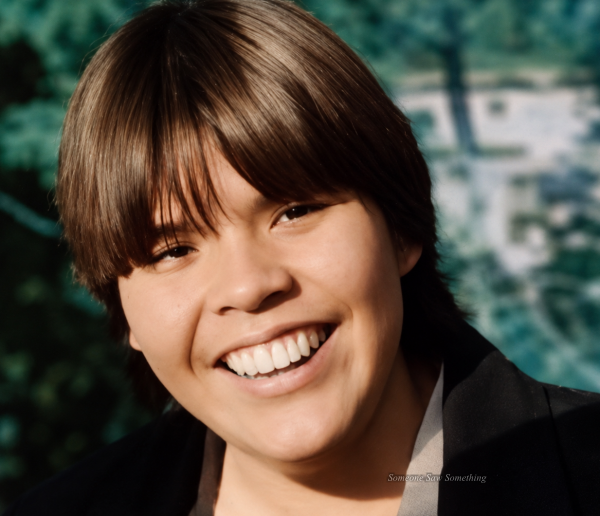
Bonnie was from the Fort St. James area and was associated with the Yekooche First Nation. Travelling between Fort St. James, Vanderhoof and Prince George was reportedly a regular part of her life. She did not always have her own transportation and was known to hitchhike alone. In northern British Columbia, where significant distances separate communities and public transportation has historically been limited, hitchhiking was not unusual for people who had few other options.
According to accounts from Bonnie’s family that have appeared in subsequent reporting, her cousin Joanne saw her in Vanderhoof on the afternoon of September 8. Bonnie was reportedly hitchhiking east toward Prince George, where she had an important court appointment connected with her five children. She had been working through a series of court proceedings in hopes of having her children returned to her care and, according to her family, had been nearing the end of that process.
That appointment is one of the details that makes Bonnie’s disappearance especially troubling.
Family accounts say Bonnie had been consistently attending the court proceedings and had not previously missed one. Then, after being seen in Vanderhoof, she failed to appear for the next important appointment. There was no known explanation for why she missed it, and Bonnie’s family has maintained that her disappearance was out of character.
What happened after Bonnie was seen that afternoon remains uncertain.
Police have never publicly established that Bonnie definitely entered a particular vehicle. Investigators did not know whether she accepted a ride from someone she knew, hitchhiked with a stranger, boarded a bus or made other travel arrangements. Years after she disappeared, an RCMP spokesperson acknowledged that investigators still had no lead establishing precisely how Bonnie left the area.
There is no publicly identified driver. There is no confirmed vehicle connected to her disappearance. And there is no publicly established sighting of Bonnie after September 8, 2007.
Then there is the wallet.
According to Bonnie’s cousin Vanessa Joseph and accounts subsequently published about the case, Bonnie’s wallet and identification were discovered near a lake sometime after she was last seen. An uncashed cheque was reportedly still inside. The wallet was turned over to the RCMP.
It is an intriguing and potentially important piece of the mystery, but the publicly available information surrounding its discovery is frustratingly limited. There does not appear to be a detailed public police account identifying exactly where the wallet was found, when it was discovered, who found it or what investigators concluded from it.
Family accounts have also alleged that Bonnie’s sister Sharon did not learn that the wallet had been recovered until approximately a year later. Because that detail comes from family and secondary accounts rather than the current RCMP missing-person profile, it should be treated as family testimony rather than an independently confirmed police finding.
Still, the reported contents of the wallet raise an obvious question: why would Bonnie’s identification and an uncashed cheque be left behind if she had simply decided to go somewhere else?
It doesn’t prove that Bonnie was harmed. There may be an explanation for how the wallet ended up where it did. But nearly two decades later, no publicly known explanation has emerged.
There was also an unusual delay before Bonnie was formally reported missing. Although she was last seen in September, the RCMP states that Bonnie was not reported missing to the Fort St. James detachment until December 2007. Secondary accounts identify her aunt, Rose Joseph, as the person who eventually made the report.
The three-month gap can appear alarming when viewed in isolation, but Bonnie’s circumstances provide important context. She was highly independent and travelled frequently among several communities. When someone regularly moves from place to place and maintains different groups of friends and relatives, it can take time before everyone realizes that nobody has heard from them.
Once Bonnie’s family understood that she had seemingly disappeared from everyone’s lives, however, the situation looked very different. She had missed important appointments concerning her children. Her family wasn’t hearing from her. Her wallet and identification had reportedly surfaced without her. And nobody could explain where she had gone.
The official Canada’s Missing profile uses the dated description that Bonnie led a “high risk lifestyle.” That label provides little meaningful insight into who Bonnie was or what happened to her. What is relevant to the investigation is that Bonnie frequently hitchhiked alone over considerable distances, potentially placing her in vehicles with people she did not know well.
The geography of Bonnie’s disappearance has inevitably led to comparisons with one of Canada’s most disturbing collections of missing-person and homicide cases.
Highway 16 through northern British Columbia has become widely known as the Highway of Tears because of the many women and girls – disproportionately Indigenous – who have disappeared or been murdered along the highway and surrounding routes over several decades. Vanderhoof and Prince George both sit along Highway 16, while Fort St. James lies to the north.
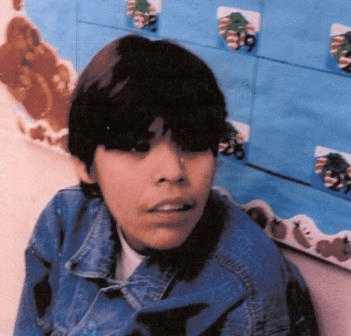
Bonnie is consequently included in many broader discussions and memorials concerning the Highway of Tears. However, an important distinction should be made: Bonnie was not one of the cases formally included in the RCMP’s Project E-PANA investigation. Her disappearance may be discussed within the broader geographical and social context of the Highway of Tears without implying that police have established a connection between her disappearance and any of the other cases.
There is another painful connection within Bonnie’s own extended family.
In June 2013, nearly six years after Bonnie disappeared, her cousin Immaculate “Mackie” Basil disappeared near Fort St. James. Mackie’s case also remains unresolved. Having two women from the same extended family disappear within the same region is understandably striking, but there is no publicly established evidence demonstrating that Bonnie’s and Mackie’s disappearances are connected.
Bonnie had several tattoos that could help distinguish her from others. The current Canada’s Missing record describes a heart containing the words “Mom & Djily” on her left forearm, “DOTS” tattooed across the knuckles of her left hand and an “X” on the same hand. Her right upper arm bore several tattoos, including a skull-and-cross design, “BMJ,” the number “20” and the letters “CHSLUA.”
Those details remain particularly important in a disappearance where so little physical evidence has ever been made public. There have been no publicly announced arrests in Bonnie’s disappearance and no suspect has been publicly identified. Police have not publicly established that Bonnie was murdered, and she remains officially classified as missing. There is also no publicly confirmed evidence connecting her disappearance to a serial offender or to another Highway of Tears case.
That leaves several possibilities open, but very few answers.
Perhaps Bonnie accepted a ride from a stranger. Perhaps the driver was someone she knew. Perhaps she changed her plans before reaching Prince George. Whatever happened, the trail appears to end after she was seen in Vanderhoof.
The reported discovery of her wallet adds another layer to that mystery. If Bonnie lost it accidentally, where was she when that happened? If she deliberately discarded it, why? And if someone else left it near the lake, how did that person come to possess Bonnie’s belongings?
Most importantly, did Bonnie ever make it out of Vanderhoof?
As the years passed, Bonnie’s children grew older without knowing what happened to their mother. Her family continued searching for answers, and her name became another among the many Indigenous women whose disappearances have haunted northern British Columbia.
Yet Bonnie Marie Joseph should not be remembered simply as another name associated with the Highway of Tears.
She was a mother of five. According to her family, she was trying to regain custody of her children. She had something important to show up for and something deeply personal to work toward.
On September 8, 2007, Bonnie was seen in Vanderhoof.
She reportedly intended to travel toward Prince George.
Then she disappeared.
Her wallet and identification would reportedly surface without her.
Bonnie never did.
Nearly two decades later, one fundamental question remains unanswered: what happened to Bonnie Marie Joseph after she was last seen that September afternoon?
If you have information on Bonnie’s case, please contact any of the following:
RCMP “E” Division – Major Crime Section – North District Major Crime Unit: 1-250-649-3900
Reference Case#: 2007-4626
Canada’s Missing Case reference: 2013000126
Crime Stoppers: 1-800-222-TIPS(8477)
Online at: https://www.canadiancrimestoppers.org/submit-a-tip/submit-a-tip
Crime Stoppers provides anonymous tipping
Send email to the National Centre for Missing Persons and Unidentified Remains at: canadasmissing-disparuscanada@rcmp-grc.gc.ca
Sources: Government of Canada’s Canada’s Missing database and RCMP case record for Bonnie Marie Joseph, CFNR Network, Tears to Hope Society, historical Prince George Citizen reporting, MissingPeople.ca, and archival reporting and family accounts concerning Bonnie Marie Joseph’s disappearance.
🕯️ Subscribe to Someone Saw Something. I dig through the details, ask the unanswered questions, and occasionally fall down research rabbit holes so you don’t have to. 🧡


Leave a Reply