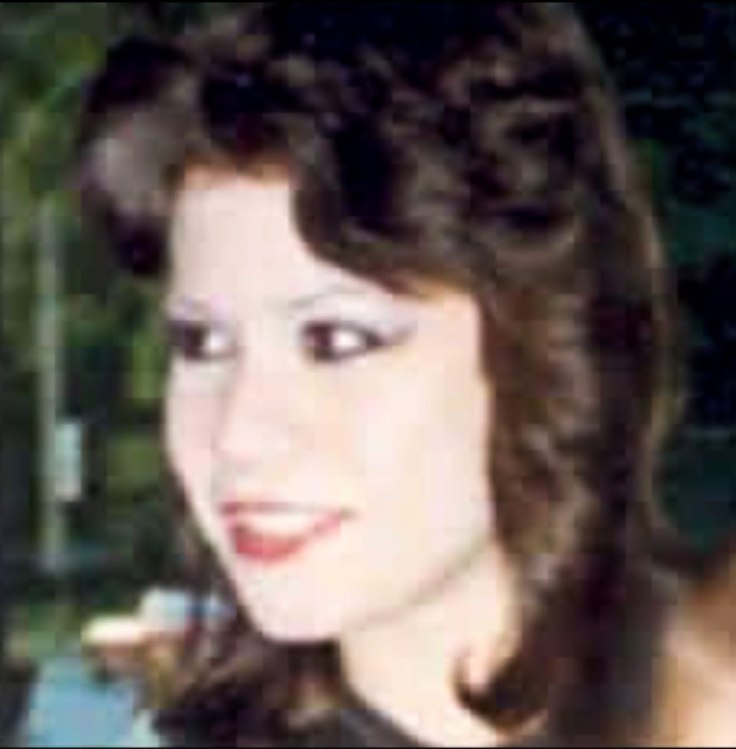
Benita “Bonnie” Tarantino was only 17 years old when she disappeared from Toronto in the early morning hours of September 28, 1985. One month later, her body was discovered beside a lonely rural road north of the city. More than 40 years have passed, yet the person responsible for her death has never been identified.
In 1985, Bonnie was reportedly living in Toronto and working as a survival sex worker in the city’s Cabbagetown neighbourhood. Some secondary accounts indicate that she had become involved in sex work when she was extraordinarily young, possibly around the age of 13. If accurate, it is an important reminder that Bonnie was not simply a woman working on Toronto’s streets. She was a vulnerable child who had been sex trafficked.

There are frustratingly few details available about Bonnie’s personal life. Secondary reporting has indicated that she was living on Ulster Street and that, shortly before she disappeared, she had become engaged to her boyfriend. One account suggests that the engagement occurred only a day before she vanished. These details don’t appear in York Regional Police’s current public cold-case profile, so they should be regarded as information preserved through secondary historical reporting rather than facts currently confirmed by police.
What police do confirm is that Bonnie was last seen during the early morning hours of September 28, 1985, in the area of Pembroke and Gerrard Streets in Toronto.
Investigators believe she got into a vehicle.
The vehicle drove away and Bonnie never returned.
That vehicle may represent one of the most important clues in her entire case, yet remarkably little has been publicly disclosed about it. Police have not provided a description of the vehicle, identified its driver, or said whether Bonnie appeared to know the person behind the wheel. We don’t know whether she entered voluntarily because she recognized the driver, whether she believed the person was a customer, or whether there was some other reason she got inside.
After that moment, Bonnie seemingly disappeared.
For the next month, there was no publicly known trace of the 17-year-old.
Then, on October 28, 1985, someone made a grim discovery along Teston Road in Vaughan.
Today, Teston Road runs through a dramatically different landscape, surrounded in places by subdivisions, businesses and busy traffic. In 1985, however, York Regional Police describe it as essentially a dirt road running through a rural area.
It was the kind of secluded location where someone could potentially leave a body without immediately being noticed.
Bonnie’s remains were discovered near the edge of a farmer’s field. Secondary accounts place the location on the north side of Teston Road, between Pine Valley Drive and Weston Road. Her body was reportedly found in a wooded or overgrown area away from downtown Toronto and far from the place where she had last been seen.
She was not immediately identified.
It took approximately three more days before investigators established that the young woman found along Teston Road was Benita Tarantino.
Some secondary accounts report that Bonnie was found without clothing. York Regional Police’s current public cold-case page does not provide that detail, so it is best treated as information from historical reporting rather than something currently confirmed in the police profile.
There is also an important question surrounding Bonnie’s cause of death.
Bonnie has sometimes been grouped with several other Toronto-area sex workers whose deaths involved strangulation, and some modern true-crime accounts have consequently stated that Bonnie was strangled as well. However, other detailed secondary reporting says that her autopsy was unable to determine a cause of death.
York Regional Police have not disclosed Bonnie’s cause of death publicly.
Without a stronger police, coroner or contemporary source confirming strangulation, it would therefore be misleading to state that Bonnie was strangled. Her death is being investigated as a homicide, but exactly how she died has not been clearly established in the information currently available to the public.
There is another enormous unanswered question.
Where was Bonnie during the month she was missing?
Finding her body on October 28 does not necessarily tell us when she died. Publicly available information does not establish whether Bonnie was killed shortly after getting into the vehicle in Toronto or whether she remained alive for some period afterward.
That missing month could contain the answer to everything.
Someone drove Bonnie away from Pembroke and Gerrard Streets. Somehow, she eventually ended up along a rural road in Vaughan. If Bonnie was killed somewhere other than where she was discovered, someone also had to transport her remains to Teston Road.
The distance between those locations makes the vehicle particularly significant.
It also raises questions about why the person responsible chose Teston Road. Was it simply isolated enough to provide privacy? Did the killer regularly travel through Vaughan? Did the person live or work nearby? Were they familiar with the rural roads north of Toronto?
There is no publicly released evidence answering those questions, and familiarity with the area should not automatically be assumed. But the choice of location remains an intriguing part of the mystery.
Bonnie’s murder becomes even more troubling when considered alongside the murders of several other sex workers in and around Toronto during roughly the same era.
Susan Siegel was murdered in December 1984, less than a year before Bonnie disappeared. Susan was 21 and was last seen getting into a vehicle near Isabella and Sherbourne Streets. The following morning, she was found dead in an industrial area of west Toronto. Historical reporting indicates that police were interested in a small truck and an unidentified man in connection with Susan’s case.
Nine months later, Bonnie was reportedly seen getting into a vehicle before she disappeared.
Then came other cases.
Lilliane Lyle Ford was murdered in 1990. Lori Pinkus was murdered in September 1991. Donna Oglive was murdered in 1998.
All five women have been allegely been engaged in survival sex work, and several were strangled. In multiple cases, the women were discovered somewhere other than the place where they had last been seen alive.
It is easy to look at those similarities and wonder whether Toronto had a serial predator deliberately targeting vulnerable women.
Perhaps it did.
But there is currently no public confirmation that Bonnie’s murder was connected to Susan Siegel, Lilliane Ford, Lori Pinkus or Donna Oglive.
In fact, Bonnie’s uncertain cause of death is one reason we should be especially cautious about grouping the cases together. If her cause of death could not be determined, she cannot confidently be included in a supposed series of strangulation murders simply because other circumstances resemble those cases.
Donna Oglive’s case also demonstrates why apparent patterns need to be approached carefully.
Donna was murdered in Toronto in 1998, and for decades her killer remained unidentified. Advances in DNA technology and investigative genetic genealogy eventually led investigators to Ronald Gordon Ackerman, who was arrested in 2025 and charged with first-degree murder. Ackerman remains accused rather than convicted, but the breakthrough demonstrates the enormous potential of preserved forensic evidence.
It also raises an obvious question for Bonnie’s case.
What evidence still exists?
Police have not publicly disclosed whether usable DNA was recovered in Bonnie’s investigation or whether evidence preserved from 1985 could now be examined using modern forensic techniques. Given the extraordinary advances in DNA testing and genetic genealogy over the past four decades, the possibility is impossible not to wonder about.
But without confirmation from investigators, we cannot say that Bonnie’s killer left DNA behind.
There is another issue that deserves attention when telling Bonnie’s story.
She is frequently described first as a sex worker. While that may be relevant to the investigation because it could explain how she encountered the person who drove away with her. But it should never become the defining feature of who she was.
Bonnie was 17.
She was just a teenager.
If reports that she had been engaged in survival sex work from approximately age 13 are correct, that does not make her responsible for the dangerous circumstances surrounding her. It instead illustrates just how vulnerable she was and how easily someone could have exploited that vulnerability.
Somewhere beyond the limited police reports and newspaper archives was a girl with friends, relationships, hopes and plans. The report that she had recently become engaged provides one small glimpse of a teenager apparently imagining a future that she would never have the opportunity to live.
Someone took that future away from her.
More than four decades later, the most important clue may still be the simplest one.
A vehicle.
During the early morning hours of September 28, 1985, Bonnie Tarantino was seen in the area of Pembroke and Gerrard Streets in Toronto. Investigators believe she entered a vehicle and was driven away.
Who was behind the wheel?
Did Bonnie know that person?
Where did they go?
What happened during the month between Bonnie’s disappearance and the discovery of her body?
Was Teston Road merely a disposal location, or did something happen to Bonnie there?
And did the person responsible ever hurt another woman?
Those questions remain unanswered.
Bonnie’s murder is still an active York Regional Police cold case, and after more than 40 years, no one has been publicly identified as the person responsible for her death.
A 17-year-old girl climbed into a vehicle in Toronto.
A month later, she was found dead beside a rural road in Vaughan.
Someone knows what happened in between.
If you have information on Susan’s case, please contact any of the following:
Toronto Police Service:
Telephone: 416-808-7400
Email: homicide@torontopolice.on.ca
Case reference: 1985-25327
Crime Stoppers: 1-800-222-TIPS(8477)
Online at: https://www.canadiancrimestoppers.org/submit-a-tip/submit-a-tip
Crime Stoppers provides anonymous tipping
Sources: York Regional Police Cold Cases, Ontario Cold Cases archival research, Nicoll Investigations’ Ontario homicide research, historical reporting concerning the disappearance and murder of Benita “Bonnie” Tarantino, and archival true-crime reporting examining unresolved murders of survival sex workers in the Toronto area.
🕯️ Subscribe to Someone Saw Something. I dig through the details, ask the unanswered questions, and occasionally fall down research rabbit holes so you don’t have to. 🧡


Leave a Reply