Cynthia Sunga was 29 years old when she disappeared from Ottawa, Ontario, in the summer of 2005. More than two decades later, remarkably little is publicly known about what happened to her during those final days. There have been no publicly confirmed sightings, no known contact with her family, and no discovery that has explained where Cynthia went.

Cynthia had immigrated to Canada from the Philippines and was the youngest of five siblings. At the time of her disappearance, she was living in Ottawa with her common-law partner and young daughter and reportedly worked at a record store. Both of Cynthia’s parents had died, but she remained connected to other members of her family.
According to Canada’s Missing, Cynthia was last seen at her family home on Donald Street in Ottawa on or about August 25, 2005. She has not been seen or heard from since.
One of the difficult aspects of Cynthia’s case is the amount of time between her last known sighting and the beginning of the official missing-person investigation. Cynthia was reported missing to Ottawa Police on November 11, 2005, by a family member, approximately two and a half months after she was last known to have been seen.
That passage of time should not automatically be interpreted as evidence that anyone did something wrong. Adults sometimes leave or lose contact for extended periods, and every family and relationship has different circumstances. What matters is that Cynthia’s continued absence eventually became concerning enough that a missing-person report was made and police began trying to determine where she was.
Once investigators began searching for Cynthia, however, they reportedly found very little evidence that she had continued living her ordinary life. Earlier reporting on her case indicated that investigators found no subsequent activity involving her health card, bank card or Social Insurance Number. Because Cynthia had previously lived in the Philippines, investigators also reportedly explored the possibility that she had returned there. No evidence was found indicating that she had done so.
That absence of activity became increasingly concerning. While adults have the right to leave voluntarily and begin their lives somewhere else, doing so without apparently leaving a trace through banking, government identification or other ordinary records can make that explanation more difficult to establish.
Cynthia also left behind a young daughter, who was reportedly approximately three years old when her mother disappeared. There has been no publicly documented contact between Cynthia and her daughter since 2005.
As the years passed, Cynthia’s family became increasingly concerned that she might no longer be alive. Archived reporting about the case described her family as fearing that the investigation had stalled and referred to Cynthia as being presumed dead.
That wording requires an important distinction. Cynthia’s family fearing that she died is not the same as investigators establishing that she did. Cynthia’s remains have never been publicly reported as recovered, and her case continues to be classified as a missing-person investigation.
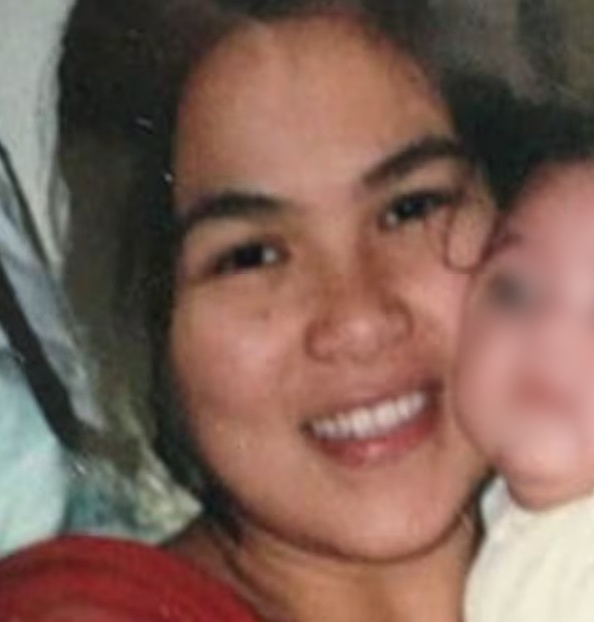
There are also surprisingly few publicly available details about Cynthia’s final known day.
Canada’s Missing identifies her family home on Donald Street as the place she was last seen, but does not explain what Cynthia was doing that day, whether she had plans, whether she was expected somewhere afterward or what she was wearing when she disappeared. It does not publicly identify precisely who last saw her.
Even the date contains some uncertainty. The national record states that Cynthia was last seen “on or about” August 25, 2005, rather than identifying August 25 as an unquestionably confirmed date. Considering the amount of time that passed before the missing-person report was made, investigators may have faced difficulties reconstructing an exact timeline. Authorities have not publicly explained the reason for that wording.
There is similarly little reliable public information concerning what investigators believe happened to Cynthia.
No person has been publicly identified as responsible for her disappearance, and there is no publicly known evidence establishing that Cynthia was the victim of a homicide. Naturally, investigators would want to understand the circumstances surrounding her home, relationships and final known contacts, but investigating those areas does not mean that any particular person was responsible.
Cynthia is described as approximately 5’4″ tall and weighing about 99 pounds, with a slender build, black shoulder-length hair and black eyes. She also has several distinctive tattoos that could potentially help identify her. Cynthia has a dragon tattoo on her left shoulder, a tribal heart with Chinese characters meaning “strong” on her lower back, and a daisy tattoo on her abdomen containing the date “07-22-93.”
Investigators also have dental information available. Canada’s Missing records that Cynthia was missing an upper molar that had been removed in 2000 and that dental records relating to adjacent teeth are available. Information like this can become particularly important in long-term missing-person investigations when authorities compare missing individuals with unidentified remains.
More recently, Cynthia’s case was added to The Doe Network, giving her disappearance additional exposure more than twenty years after she vanished. That listing does not indicate any new developments in the police investigation, but it provides another avenue through which her case can remain visible.
There has also been occasional online speculation attempting to compare Cynthia with unidentified women found elsewhere. None of those proposed connections should be treated as established leads without confirmation from investigators. At present, there is no publicly confirmed unidentified-person case known to have been connected to Cynthia.
As of August 2026, Canada’s Missing continues to list Cynthia Sunga as missing from Ottawa.
What makes Cynthia’s disappearance particularly haunting is how little of her final timeline has ever become public. A 29-year-old mother was last known to have been at her Ottawa home in August 2005. When her continuing absence eventually raised concern, a missing-person investigation began. Investigators reportedly found no subsequent activity involving several of the ordinary records that might indicate Cynthia was living somewhere else. Efforts to determine whether she had returned to the Philippines reportedly produced no evidence that she had.
And then there is silence.
There is no publicly confirmed trail showing Cynthia leaving Ottawa. There is no known evidence showing her establishing a life elsewhere. There has been no publicly confirmed communication from her, and she has never been found.
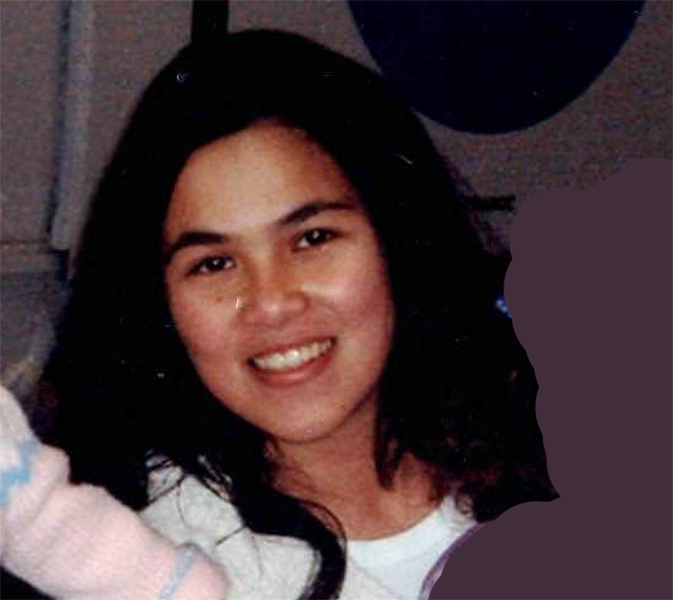
Those circumstances can certainly raise the possibility that something happened to Cynthia shortly after she disappeared, but possibility is not proof. Without Cynthia, her remains, a confirmed crime scene or other evidence explaining what happened, the circumstances surrounding her disappearance remain unresolved.
More than twenty years later, the questions are remarkably similar to those investigators and Cynthia’s loved ones faced in 2005.
What happened to Cynthia after she was last seen at her Donald Street home? Did she leave voluntarily, and if so, where did she go? Did someone see or speak with her afterward? Or did something happen to Cynthia before anyone realized she was truly missing?
Cynthia Sunga would now be 50 years old. Somewhere, there may still be a person who remembers something about those final days in August 2005—a conversation, a sighting or a detail that did not seem important at the time.
Until that information emerges, Cynthia’s family is left without the one answer they have been waiting more than two decades to receive:
What happened to Cynthia Sunga?
If you have information on Cynthia’s case, please contact any of the following:
Ottawa Police Service:
Telephone: 613-236-1222
Email: missingpersons@ottawapolice.ca
Reference Case#: 2005-320749
Canada’s Missing Case reference: 2011002399
Crime Stoppers: 1-800-222-TIPS(8477)
Online at: https://www.canadiancrimestoppers.org/submit-a-tip/submit-a-tip
Crime Stoppers provides anonymous tipping
Send email to the National Centre for Missing Persons and Unidentified Remains at: canadasmissing-disparuscanada@rcmp-grc.gc.ca
Sources: Canada’s Missing, Ottawa Police Service, CBC News archived reporting, The Doe Network.
🕯️ Subscribe to Someone Saw Something. I dig through the details, ask the unanswered questions, and occasionally fall down research rabbit holes so you don’t have to. 🧡

