Mary Boyle was only six years old when she disappeared from a remote part of County Donegal on March 18, 1977. What should have been an ordinary family visit became the beginning of one of Ireland’s longest-running and most controversial missing-child cases. Almost half a century later, Mary has never been found, no one has been convicted in connection with her disappearance, and questions remain about what happened during the few minutes in which she seemingly vanished.
Mary was born on June 14, 1970, and lived with her family in Belcruit, Kincasslagh, County Donegal. She had an identical twin sister, Ann, as well as other siblings. In March 1977, Mary travelled with her parents and siblings to visit her maternal grandparents at their home in Cashelard, near Ballyshannon. The property was in a rural area surrounded by fields, bogland and waterways.
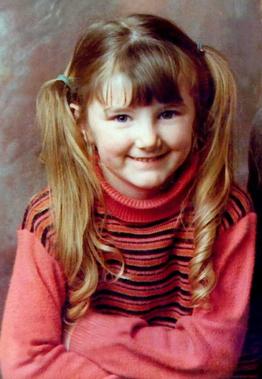
On the afternoon of March 18, Mary was outside playing when her uncle set off across the fields toward a neighboring property. Mary followed him. The neighbor’s home was only a few hundred metres away, but at some point along the way they encountered difficult, wet ground. Mary was reportedly told to turn around and return to her grandparents’ house while her uncle continued onward.
It should have been a very short walk, but Mary never made it back.
When her uncle later returned to the grandparents’ home, it became apparent that Mary was not there. Nobody had seen her return. Somewhere between the point where she turned back and the house she was walking toward, the six-year-old had disappeared.
At the time she vanished, Mary was approximately 3ft 11in tall and weighed about 49 pounds. She had light brown hair and was wearing a lilac-colored hand-knitted cardigan, brown jeans and black Wellington boots. Those details remain on her official Garda missing-person profile today.
The search for Mary quickly grew. Family members, neighbors, Gardaí and volunteers searched the surrounding countryside. Fields, boggy areas and waterways were examined as investigators initially faced the very real possibility that a small child had simply wandered away or suffered an accident.
The terrain made that possibility plausible. A child could potentially fall into water, become trapped in bogland or become disoriented in the countryside. But despite extensive searching, there was no trace of Mary. Her clothing was not recovered, and nothing was found that conclusively demonstrated that she had suffered an accident.
The way the scene was handled in 1977 would later become an important issue. Retired Detective Sergeant Aidan Murray, who worked on the investigation, said that if the disappearance occurred under modern policing procedures, the area would likely have been immediately sealed off as a potential crime scene. Instead, large numbers of people walked through the area while searching for Mary, potentially disturbing footprints, tyre marks or other evidence that might have helped investigators reconstruct what happened.
Of course, the people searching that afternoon had no way of knowing whether they were entering a crime scene. Their priority was finding a missing six-year-old as quickly as possible.
As the search failed to locate Mary, the possibility that another person had been involved became increasingly difficult to ignore. If Mary had simply turned around and walked toward her grandparents’ house, how could she disappear so completely during such a short journey?
Over the decades, various theories have emerged. Some believe Mary suffered an accident and remains somewhere in the difficult Donegal terrain despite the searches. Others, including some relatives and former investigators, have publicly expressed the belief that Mary was killed and her remains concealed.
However, no definitive evidence establishing what happened to Mary has ever been made public.
The case never completely closed. Gardaí continued investigating and eventually conducted reviews of the original inquiry. A significant new review began in 2011. Investigators interviewed numerous people again and carried out searches with assistance from forensic and geological specialists.
Then, in October 2014, there was a major development. For the first time in the decades-long investigation, Gardaí arrested someone in connection with Mary’s disappearance. A 64-year-old man was arrested on suspicion of kidnapping after investigators said the review team had uncovered new evidence. He was questioned at Mullingar Garda Station.
The man was subsequently released without charge. Gardaí said that further investigation would continue and that a file would be forwarded to the Director of Public Prosecutions. The arrest did not result in a prosecution, and Mary’s disappearance remained unsolved.
By 2016, Mary’s case had become the focus of renewed public attention, but that attention also brought serious controversy.
The documentary Mary Boyle: The Untold Story featured allegations from retired Garda officers that political interference had affected the original investigation. Retired Sergeant Martin Collins and former Detective Sergeant Aidan Murray alleged that a politician contacted Ballyshannon Garda station while a person considered significant to the investigation was being questioned. They claimed that the investigation subsequently backed away from certain questioning.
Those allegations became one of the most widely discussed aspects of Mary’s case, but they must be separated from established fact. Political interference in Mary’s disappearance has never been proven in court, and individuals publicly associated through speculation with the allegation denied involvement. The claims therefore remain allegations rather than an established explanation for why the case was not solved.
Mary’s twin sister, Ann Doherty, became one of the most determined public advocates for answers. She met politicians in Ireland and travelled internationally while campaigning for greater scrutiny of the investigation. Ann publicly raised concerns about how her sister’s disappearance had originally been investigated and called for further examination of the case.
There have also been serious allegations that Mary may have been sexually abused by someone known to her and that her disappearance could have been connected to that abuse. These claims have circulated publicly and have been raised by people close to the case, but they have never been established as fact. No person has been convicted of sexually abusing or murdering Mary Boyle.
In July 2016, Gardaí once again searched land near the place where Mary disappeared. A small area was pumped out and drained, and a forensic anthropologist attended the search. The location had been searched previously, but investigators returned at the request of Mary’s family.
Once again, nothing was found.
Gardaí announced that the operation had produced no new evidence. At around the same time, the Serious Crime Review Team was tasked with examining the case from the beginning to determine whether anything had been overlooked or whether developments in investigative techniques could provide a new avenue to pursue.
In 2018, on the 41st anniversary of Mary’s disappearance, Gardaí issued another public appeal. They emphasized that the investigation remained live and ongoing and asked anyone possessing tangible evidence that could advance the investigation to come forward.
One of the enduring mysteries is how narrow the apparent window of opportunity was.
Mary was not believed to have embarked on a long journey by herself. She had followed her uncle a relatively short distance across the countryside and then turned around to walk back toward a house where several members of her family were gathered.
Somewhere along that short route, she disappeared.
If Mary suffered an accident, decades of searches have failed to locate her.
If someone encountered her, the circumstances of that encounter have never been conclusively established.
If she was killed, her remains have never been recovered.
And if someone witnessed something important that afternoon, whatever they knew has never produced the breakthrough necessary to bring Mary home.
The passage of time has taken away some of the people who might once have seen the case solved, while Mary’s family has lived for decades without knowing exactly what happened to her. Her twin sister grew from a six-year-old child into an adult while continuing to seek answers about the sister who disappeared beside her childhood.
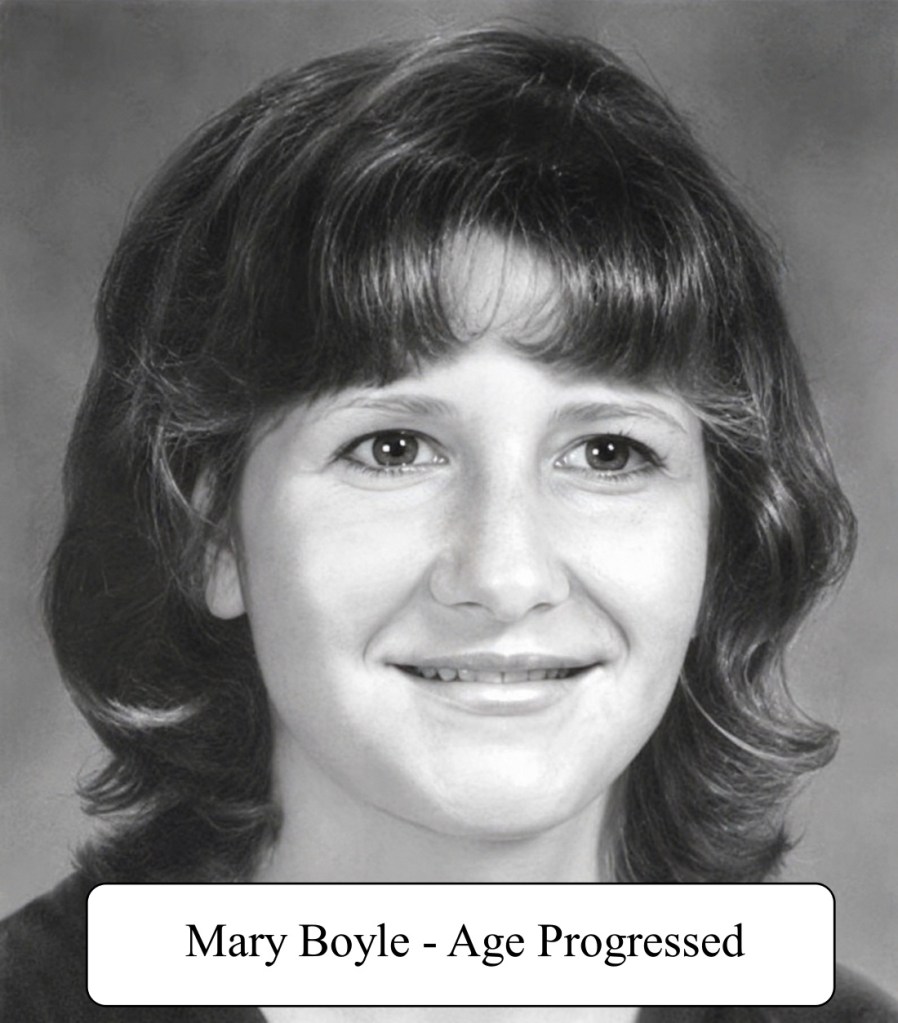
Gardaí have published an age-progressed image showing what Mary might look like as an adult, and her original missing-person profile remains publicly available.
Mary Boyle would be 56 years old today.
Yet in the public record, she remains forever six: a little girl in a lilac cardigan, brown jeans and black Wellington boots, walking back across the fields toward her grandparents’ house on a March afternoon in 1977.
She never arrived.
Nearly fifty years later, the fundamental question has never changed.
What happened to Mary Boyle?
If you have any information regarding Mary’s case, please contact:
An Garda Síochána Headquarters:
Telephone: +353 1 666 0000
Confidential: 1800 666 111
Sources: An Garda Síochána, RTÉ News and The Irish Times
🕯️ Subscribe to Someone Saw Something. I dig through the details, ask the unanswered questions, and occasionally fall down research rabbit holes so you don’t have to. 🧡

