Eileen Faye Williams was only 19 years old when she disappeared from Prince Edward Island on August 6, 1962. More than six decades later, no confirmed trace of her has ever been found. Her disappearance remains one of PEI’s oldest cold cases, and the RCMP has described the circumstances as suspicious.
Eileen was the youngest of seven children and grew up in Beach Point, a small community in eastern PEI. By the time she was about 17, she had moved to Hamilton, Ontario, where she lived with her older sister Eva and two young nieces. She finished high school, took stenography courses and found work as a secretary in a Hamilton law office. Although she was building an independent life in Ontario, she remained close to her family and returned to PEI during the summers.
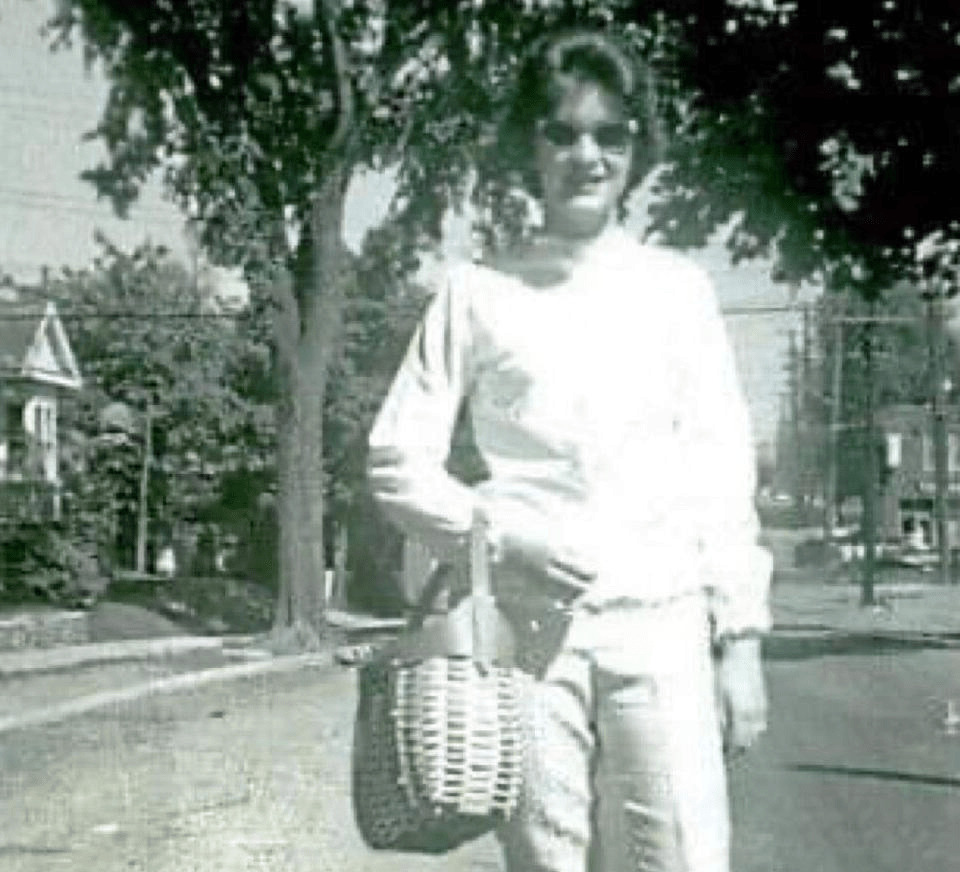
Her family remembered Eileen as outgoing, kind, popular and fun-loving. Her niece Pauline Campbell recalled that Eileen sent presents home even though she was still only a teenager herself. At Christmas in 1961, Pauline received a pink quilted housecoat from her aunt, a small family memory that became much more precious after Eileen vanished.
In the summer of 1962, Eileen once again returned to Beach Point for a vacation. Nothing publicly released about her circumstances suggests that she intended to permanently leave her family or abandon the life she had established in Hamilton. She had employment there, money in the bank and a return plane ticket to Ontario.
On Monday, August 6, Eileen’s sister-in-law Pearle drove her from Beach Point into Montague. Eileen was dropped at the post office, where she planned to mail postcards. She also had some errands to run, including having the clasp on a broken necklace repaired, and she hoped to visit girlfriends she knew from her school days.
There was also the possibility of a party that evening. Information gathered during the original investigation indicated that Eileen had been considering attending a party in Montague. She had told her family that she might spend the night with one of her girlfriends. If she didn’t stay with friends, however, she planned to return to Beach Point.
By that evening, Eileen apparently had decided to head in the direction of home.
At approximately 7:00pm, an RCMP officer travelling toward Montague saw Eileen walking south on Wood Islands Hill, along the road leading toward Murray River and Beach Point. She was wearing a green sweater and black slacks with a white stripe. Crime Stoppers records also indicate that she was carrying a straw handbag.
That became the last confirmed sighting of Eileen Faye Williams.
Her family’s later statement said that Eileen was believed to be leaving Montague and presumably intended to hitchhike home to Beach Point. Hitchhiking would not have been particularly unusual in rural PEI in 1962, but it introduces one of the most important possibilities in the case: Eileen may have entered a vehicle sometime after the RCMP officer passed her. The publicly released police information does not confirm that she did.
Eileen didn’t arrive home that night. Initially, her absence wasn’t necessarily alarming because she had already told her family she might stay with friends. When she still hadn’t returned the following day, however, her family became worried. The day after that, they reported her missing to the Montague RCMP.
An enormous search followed.
Eileen’s family recalled more than 150 volunteers searching between Montague and Beach Point, while contemporary newspaper accounts put the number as high as 200. Searchers combed roadsides and surrounding countryside, with some reportedly using poles to push through long grass in hopes of finding clothing, belongings or some indication that Eileen had left the roadway. Searches continued in the weeks and months after she disappeared.
They found nothing that explained where she had gone. There was no known discovery of Eileen’s clothing or straw handbag. No remains were found along the route. There was nothing publicly disclosed suggesting she had suffered an accident while walking home. As the years passed, the possibility that Eileen had deliberately disappeared also became increasingly difficult to reconcile with the evidence.
Her return plane ticket to Hamilton was never used. Her bank account remained untouched for several years before the money was eventually turned over to surviving relatives. There is no publicly documented evidence that Eileen withdrew her money, contacted her family from somewhere else or quietly established another life. Her family never believed she simply ran away.
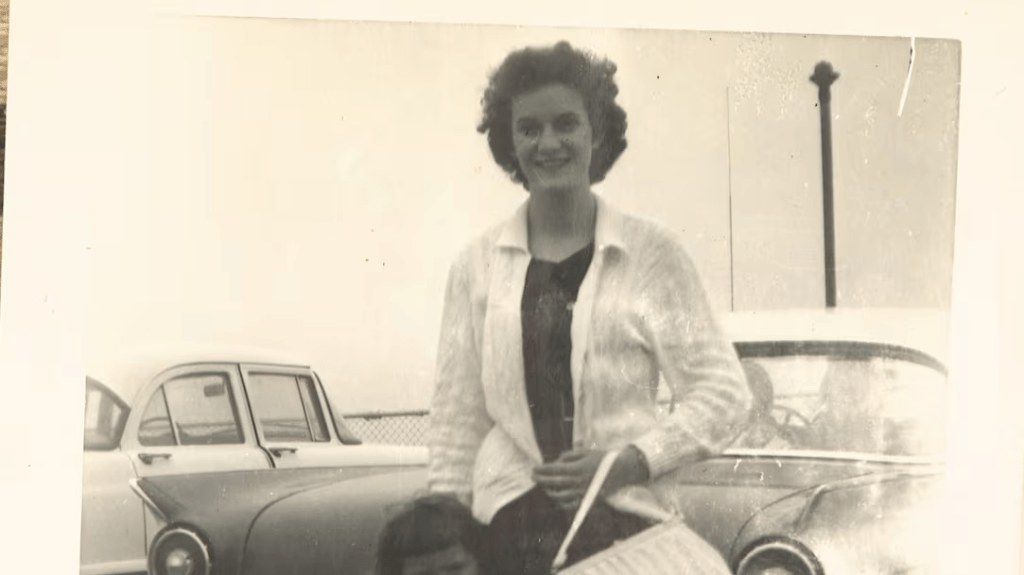
For decades, the central mystery remained essentially unchanged. Eileen was seen walking in the direction of Beach Point, a massive search concentrated on the route she was expected to travel, and yet absolutely nothing was found.
Then, many years later, the investigation received renewed attention.
In 2019, Cpl. Alexis Triantafillou of the PEI RCMP came across Eileen’s file and began reviewing it. Remarkably, the RCMP officer who had seen Eileen walking on Wood Islands Hill in 1962 was still alive and living in western Canada. Triantafillou was able to speak with him and attempted to reconnect with other people who had originally provided statements, although many witnesses had died during the intervening decades.
In August 2022, sixty years after Eileen disappeared, the RCMP and her surviving relatives issued another public appeal. By then, all of Eileen’s immediate family members had died. Her nieces, nephews and cousins had inherited the search for answers. The family released previously unseen photographs and personal memories in hopes that renewed publicity might finally persuade someone to come forward.
But the story did not end with that appeal.
In October 2024, the Eastern Graphic reported a remarkable new development. After approximately three years of independently gathering information about Eileen’s disappearance, two men, identified in the reporting as Mr. Somers and Mr. Murphy, had begun focusing their attention on the Roma at Three Rivers site in Brudenell.
The direction of this new lead was significant. According to the Eastern Graphic report, Somers and Murphy had received information from a local woman who wanted to remain anonymous. She reportedly claimed that Eileen had been taken toward Brudenell after she disappeared. If that information is accurate, it potentially changes the geography of the case.
The original search had understandably concentrated between Montague and Beach Point because that was where Eileen appeared to be heading when she was last seen. Brudenell, however, would have taken the investigation in a different direction. The 2024 article specifically described it as the opposite direction from the original Montague-to-Beach Point search.
Somers and Murphy reportedly kept the RCMP informed about the information they were gathering. Their attention eventually focused on an old well at the Roma at Three Rivers historic site. The Eastern Graphic reported that the well was approximately 80 feet from the former Malcolm Shaw homestead, which dated to 1865.
The men believed the well was an obvious place that needed to be examined if the information about Eileen being taken toward Brudenell had any truth behind it.
This is where it is especially important to separate fact from theory.
The existence of the tip does not prove that Eileen was taken to Brudenell. The fact that attention focused on a well does not prove that Eileen was placed there. And the well’s proximity to an old homestead does not make anyone associated with that property responsible for Eileen’s disappearance.
What the development does show is that more than sixty years after Eileen vanished, people were still pursuing information that potentially pointed investigators away from the route searched so extensively in 1962.
And that brings the possibility of a vehicle back into focus.
If Eileen was indeed hitchhiking home, and if she accepted a ride after the RCMP officer saw her at approximately 7:00pm, she could have been transported away from the Montague-to-Beach Point corridor very quickly. Searchers might then have been looking carefully in precisely the place everyone reasonably believed she should have been, while Eileen was somewhere entirely different.
Again, there is no public evidence proving that scenario. But the Brudenell information makes it an important possibility to consider.
There are other unanswered questions as well. Who did Eileen see while she was in Montague that day? Did she meet the girlfriends she intended to visit? Did she ever attend the party she had been considering? Did anyone else see her after the RCMP officer passed her on Wood Islands Hill? And did she get into someone’s .vehicle?

Police may possess answers to some of those questions that have never been made public. Because Eileen’s disappearance remains an active investigation, the contents of the RCMP file have not been released.
Over the decades, rumours have inevitably surrounded the case. But there is a considerable difference between community stories and evidence. Unless those stories can be supported by police records, contemporary reporting or other reliable documentation, they shouldn’t be presented as explanations for Eileen’s disappearance.
What we do know is troubling enough.
Eileen had established a life for herself in Hamilton. She had a job, family connections, money in the bank and a ticket to return to Ontario. On August 6, 1962, she went into Montague to mail postcards, repair a necklace and see friends.
At approximately 7:00pm, an RCMP officer saw her walking south on Wood Islands Hill, apparently heading toward home.
Then she disappeared.
More than 150 people searched for her, with contemporary reports putting the number as high as 200. Nothing was found. Her bank account remained untouched. Her plane ticket was never used. Her family never heard from her again.
Sixty years later, investigators were still asking for answers.
And in 2024, information gathered outside the original investigation raised a haunting new possibility: perhaps everyone had been searching in the wrong direction.
Whether the Brudenell lead will ultimately explain what happened to Eileen remains unknown. It should be regarded as a lead, not a solution. As of the information I can verify, Eileen has not been found and there has been no publicly announced resolution of her disappearance.
What happened during those hours after she was seen on Wood Islands Hill remains the mystery at the heart of the case.
Did Eileen accept a ride?
Did someone take her away from the route toward Beach Point?
And after more than six decades, does someone still know where she was taken?
Eileen Faye Williams was 19 years old when she vanished. Her parents and siblings died without learning what happened to her. Today, another generation of her family continues waiting for the answer they never received.
If you have information on this Eileen’s case, please contact any of the following:
PEI RCMP Major Crime Unit: 902-566-7112
Crime Stoppers: 1-800-222-TIPS(8477)
Online at: https://www.canadiancrimestoppers.org/submit-a-tip/submit-a-tip
Crime Stoppers provides anonymous tipping
Sources: Royal Canadian Mounted Police, CBC News, PEI Crime Stoppers, The Eastern Graphic.
🕯️ Subscribe to Someone Saw Something. I dig through the details, ask the unanswered questions, and occasionally fall down research rabbit holes so you don’t have to. 🧡

