Mary Jean Kreiser was 49 years old when she disappeared in Alberta in the fall of 1987. Nearly four decades later, there are still fundamental questions about where Mary was during her final weeks, who last saw her, and whether information that became part of the official account of her disappearance was ever independently verified.
Mary was born Marie Jeanne Saint Saveur on September 12, 1938, in Wabasca, Alberta. Her father, Pierre Saint Saveur, was of Métis descent, while her mother, Adelaide Crow, was a member of the Bigstone Cree Nation. Mary was also connected to the Bigstone Cree Nation. As a child, she attended St. Martin Residential School in the Wabasca-Desmarais area, something her family specifically wanted acknowledged when they testified before the National Inquiry into Missing and Murdered Indigenous Women and Girls in 2017.
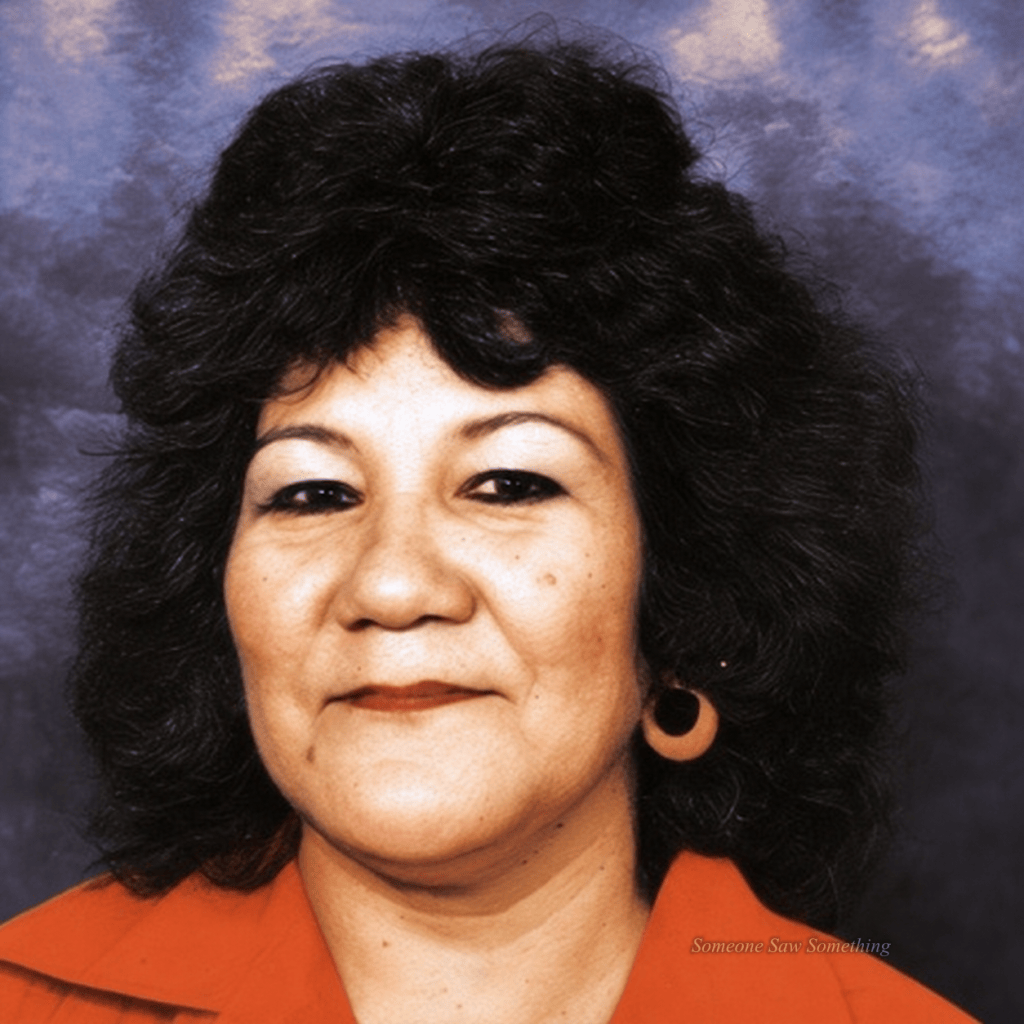
That history matters. Mary’s disappearance did not occur in isolation from the experiences that shaped her life. Her family spoke before the Inquiry not simply because they wanted to establish what happened in 1987, but because they wanted people to understand who their mother was and the circumstances through which she had lived. Decades later, that same desire was reflected when Mary’s disappearance was featured in the APTN documentary series Taken, whose episode about her focused heavily on her family’s determination that the world know the woman behind the missing-person case.
By 1987, Mary had been living in the Slave Lake area. At least part of that time was spent with her common-law partner, Al Moller, at the Roland on the River campground. According to testimony later given by Mary’s family, the relationship was troubled. Mary had spent time in Edmonton with family and was described during the Inquiry as being partly separated from Moller.
Sometime in September, Moller came to Edmonton to take Mary back to Slave Lake. During the Inquiry, one of Mary’s daughters recalled seeing her mother at Kingsway Mall near the end of September. Moller was there and, according to the testimony, was taking Mary back to Slave Lake. Her family remembered Mary appearing uncomfortable and believed she did not really want to leave with him.
That recollection creates one of the first major problems with the official chronology.
Canada’s Missing lists September 16, 1987, as Mary’s last known sighting, saying she was seen at a Petro-Canada station in Westlock. October 5, 1987, is listed as her official missing date. But her family’s testimony places Mary alive in Edmonton with Moller near the end of September after the supposed final Westlock sighting.
There may be an even later point of contact.
According to testimony before the National Inquiry, Mary’s family spoke with her by telephone around Thanksgiving. Mary was reportedly in Slave Lake and was extremely upset. Family members passed the telephone around so several people could speak with her. At some point, the phone was put down and the connection was lost.
If the family’s recollection is accurate, Mary was not simply a woman last seen at a Westlock gas station on September 16. Her family had contact with her afterward, and that contact appears to place her back in Slave Lake.
Mary had been expected to spend Thanksgiving with her family. She never arrived.
What happened after that remains unknown.
For years, another version of Mary’s disappearance has circulated. According to the official missing-person information, investigators believed Mary might have travelled to Vancouver, British Columbia. Mary’s family, however, challenged that account when they testified before the National Inquiry.
They said Moller had provided differing stories about what happened to Mary. According to the family’s testimony, one version involved Mary disappearing from Westlock. Another had Mary walking beside a highway carrying clothing in a plastic bag before being picked up by a semi-truck driver and taken to the Hastings area of Vancouver.
Mary’s family did not believe that story.
More importantly, there does not appear to be a publicly documented independent sighting establishing that Mary ever reached Vancouver, nor publicly available evidence confirming that a truck driver picked her up. The family’s recollection of speaking with Mary in Slave Lake also conflicts with the idea that she had simply left Alberta for Vancouver.
During the National Inquiry, Mary’s family made it clear that their concerns extended to Moller himself. They described him as the principal suspect in Mary’s disappearance and spoke about what they believed had been an abusive relationship.
Those suspicions became stronger because of what the family says happened after Mary vanished. During sworn testimony, one of Mary’s daughters alleged that Moller cashed Mary’s final cheque and forged Mary’s signature. She also said that Mary’s belongings had been burned.
These are serious allegations, but they need to be distinguished from established findings. There does not appear to be a publicly available police or court record establishing that Moller forged Mary’s signature, explaining precisely which belongings were burned, or establishing that he was responsible for Mary’s disappearance. No one has been convicted of harming Mary, and the publicly available RCMP information does not establish that Moller killed her.
Mary’s family nevertheless believed there were places that deserved much greater investigative attention.
One was Roland on the River, the campground where Mary and Moller had lived. Her family described the property as having wooded areas, access to the river and an old dump area. They questioned during the Inquiry whether modern forensic technology could be used to search the property for evidence or human remains.
They also raised concerns about another location associated with work Moller had reportedly performed and questioned whether specialized equipment could be used to search it. According to the family’s testimony, they were told that without a more specific location, searching such a large area would be difficult.
There does not appear to be a public record establishing that either location subsequently underwent the comprehensive forensic examination Mary’s family hoped for.
There were also longstanding concerns about how Mary’s disappearance was initially handled.
Her family testified that early interactions with authorities included questions about Mary’s Indigenous identity and alcohol use. They felt that assumptions about their mother’s circumstances contributed to her disappearance not receiving the urgency it deserved.
One of Mary’s daughters eventually began assembling information herself. She described spending years reconstructing dates, speaking with relatives and gathering material about her mother’s disappearance because she believed the existing investigation contained too little information.
The family also wanted Mary’s public missing-person information corrected. During the 2017 Inquiry, they specifically raised concerns about the chronology and information that continued to circulate about where Mary had supposedly gone.
That leaves Mary’s final known movements frustratingly unclear.
The official account places her at a Petro-Canada station in Westlock on September 16. Her family remembers seeing her in Edmonton with Moller near the end of September. They also remember speaking with her while she was in Slave Lake around Thanksgiving. October 5 became the official missing date.
Those versions cannot all represent Mary’s final known contact.
And the difference matters.
If Mary’s family is correct, the question may never have been how Mary travelled from Westlock to Vancouver. The more important question may be what happened after Mary returned to the Slave Lake area.
There is another important element to Mary’s story. Her family has spent decades fighting against having her life reduced to stereotypes or a few lines in a missing-person database. Mary was an Indigenous woman and a residential-school survivor whose life had already been shaped by experiences that deserved to be understood with compassion rather than used to diminish the importance of her disappearance.
She was also a mother, a relative, and a woman whose family noticed when she stopped calling.
Mary was approximately 5’7″ tall and weighed about 134 pounds. She had short brown hair, brown eyes, a mole on the right side of her jaw and the letter “M” tattooed on her left wrist.
As of October 2026, Mary Jean Kreiser has been missing for almost 39 years. No publicly identified remains have been confirmed as hers, no one has been charged in connection with her disappearance, and there is no publicly established evidence proving what happened to her.
Moller died years ago. If he knew more about Mary’s disappearance than he disclosed, that information died with him unless he told someone else.
But he may not have been the only person who knew something.
Someone may remember seeing Mary in Edmonton, Westlock or Slave Lake during those final weeks. Someone may know whether she was at the campground after her family last spoke with her. Someone may remember something Moller said or did after she disappeared. And someone may know whether the story about Mary leaving for Vancouver had any basis in reality.
After nearly four decades, even a detail that once seemed insignificant could matter.
Mary Jean Kreiser deserves to be more than an unresolved case number. Her family deserves to know what happened after that final, troubled period of contact and Mary deserves to be found.
If you have information on Mary case, please contact any of the following:
Slave Lake RCMP: 780-849-3999
Reference Case#: 20141275163
Canada’s Missing Case reference: 2014001323
Crime Stoppers: 1-800-222-TIPS(8477)
Online at: https://www.canadiancrimestoppers.org/submit-a-tip/submit-a-tip
Crime Stoppers provides anonymous tipping
Send email to the National Centre for Missing Persons and Unidentified Remains at: canadasmissing-disparuscanada@rcmp-grc.gc.ca
Sources: Canada’s Missing, National Inquiry into Missing and Murdered Indigenous Women and Girls – Edmonton Public Hearing Vol. 25, Native Women’s Association of Canada – Voices of Our Sisters in Spirit, and APTN’s Taken.
🕯️ Subscribe to Someone Saw Something. I dig through the details, ask the unanswered questions, and occasionally fall down research rabbit holes so you don’t have to. 🧡


Leave a comment