On the evening of September 26, 1982, 25-year-old Delia Adriano was only steps away from the safety of her family’s Oakville home when she disappeared. Somewhere between being dropped off that night and the events witnessed about an hour later, something happened that has remained unexplained for more than four decades.
Delia was engaged to be married and worked as a secretary for WearCheck International in Toronto. That Sunday, she had spent time with her fiancé, Danny Dutra, attending a soccer game and a barbecue. At approximately 9:30pm, Danny drove Delia back to her parents’ home on Wildwood Drive. He watched her head toward the side entrance before driving away.
Delia apparently never made it inside.
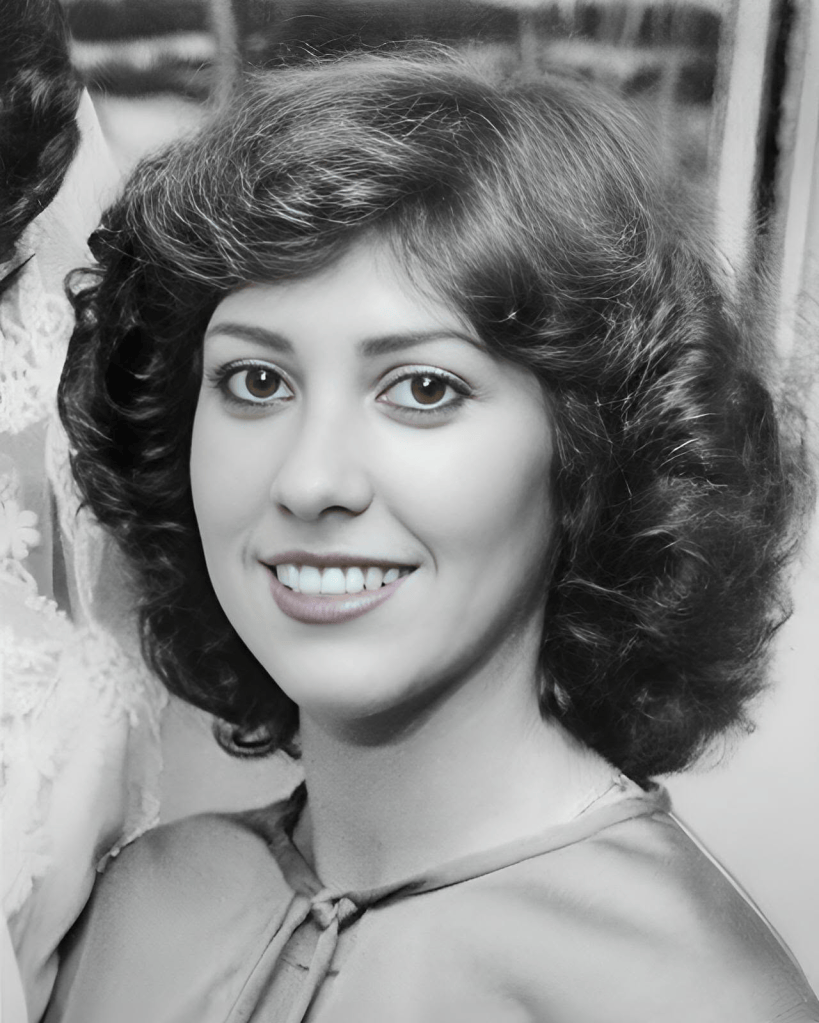
That simple fact would become one of the most troubling pieces of the case, because the next known event did not occur until approximately an hour later.
At around 10:30pm, people in the area of Wildwood Drive and Slade Crescent heard a woman screaming. Witnesses then saw a young woman matching Delia’s description being forced into a dark-coloured subcompact car by a man. A struggle continued inside the vehicle before the driver eventually pulled away with the headlights turned off.
The man was described as white, approximately 5’7″ to 5’9″ tall, with a medium build and brown hair feathered back to his neck. Police produced a composite sketch based on the witness information.
The vehicle was unusually distinctive. Investigators described it as a dark Chevrolet Chevette, or a similar two-door subcompact, with an automatic transmission, Ontario licence plates and three stripes along its side. Secondary accounts based on older reporting also state that a similar vehicle had been seen parked in the driveway of a nearby model-home sales office.
If that report is accurate, it raises an obvious question: had the driver been waiting in the neighbourhood?
There is no evidence publicly establishing that he had. The vehicle’s presence could have had another explanation. But if the car seen near the model home was indeed the same vehicle involved in the later incident, it becomes an intriguing part of the timeline.
The following morning, Delia’s purse was reportedly discovered on the sidewalk near the area where the confrontation had occurred.
Delia herself was nowhere to be found.
For almost six weeks, her family waited.
Then, on November 6, 1982, a woodcutter discovered a woman’s body in a wooded area near Second Line and Third Side Road in the Milton/Campbellville area, approximately 30 kilometres from Oakville.
The remains were identified through dental records as Delia.
Her body had been left without clothing and was badly decomposed. The condition of her remains prevented investigators from determining precisely how she had died. Reports also indicate investigators could not determine whether she had been sexually assaulted.
Delia’s death was classified as a homicide, but investigators were left without something normally considered fundamental to a murder investigation: a known cause of death.
Her fiancé was eliminated as a suspect.
The identity of the man witnesses saw that night has never been publicly established.
One of the most important questions in Delia’s case concerns what witnesses heard during the apparent abduction. Former lead investigator Detective Keith Woudstra later explained that witnesses thought the argument sounded like one between people who knew one another rather than two strangers. The verbal confrontation reportedly continued after the woman was inside the vehicle.
That observation led investigators to theorize that Delia may have known her killer.
It remains a theory rather than a proven fact.
There are other details that have been used to support the same possibility. Delia’s family reportedly noted that their dog did not bark during the encounter and wondered whether that could indicate the person outside was familiar to the household. Again, this is a theory. A dog’s behaviour cannot establish someone’s identity, and there could be many reasons an animal might not bark.
Still, when considered alongside the witnesses’ description of the argument, it contributed to the family’s belief that Delia’s killer may not have been a stranger.
Then there is the missing hour.
Delia was dropped off at approximately 9:30pm. The screaming and apparent abduction were reported at approximately 10:30pm.
What happened between those two points has never been publicly explained.
There is no reliable public evidence showing that Delia stood outside her home for an hour. There is no established account showing that she entered the house and came back outside. Nor is there publicly available evidence explaining whether she went somewhere else, met someone, made a telephone call or encountered the man shortly after her fiancé left.
The times themselves may also have been approximate.
What can be said is that the publicly available timeline contains roughly an hour between Delia being dropped off and the incident witnesses later described.
That missing period may be one of the most important unanswered questions in the entire case.
There is also a theory that the killer deliberately waited for Delia. If the report of the suspicious car being parked nearby is accurate, it is possible to wonder whether someone knew when Delia would return home and positioned himself in the neighbourhood beforehand. But there is no public evidence proving the driver was waiting specifically for Delia, so this remains speculation.
Another theory concerns motive. Because Delia’s body was discovered without clothing, sexual assault has sometimes been suggested as a possible motive. Investigators, however, were reportedly unable to determine whether Delia had been sexually assaulted because of the condition of her remains. Her lack of clothing alone does not establish what happened to her, and a sexual motive remains unproven.
There have also been suggestions over the years involving stalkers, former romantic interests, coworkers or people within Delia’s broader social circle. None of those scenarios has been publicly substantiated. No reliable evidence identifies a stalker, jealous coworker or former partner as Delia’s killer.
The most defensible theory remains the one investigators themselves have discussed: that Delia may have been familiar with the man witnesses saw that night.
But even that leaves enormous questions.
If she knew him, who was he?
Why was he near her family’s home?
Why did their interaction escalate into screaming and a physical struggle?
Why did he leave with his headlights turned off?
And why did nobody ever identify that distinctive car?
Delia’s murder devastated her family and community. Approximately 1,500 people reportedly attended her funeral at St. James Roman Catholic Church in Oakville. During the service, the priest made a remark suggesting Delia’s killer could be among those around them. Over time, that comment has sometimes been interpreted as evidence that authorities believed the killer belonged to Delia’s Portuguese community.
There is no publicly established evidence supporting that conclusion.
The priest’s statement reflected the fear and uncertainty surrounding Delia’s murder, but it should not be treated as proof that police had identified a particular community, family or social circle as containing her killer.
Decades passed.
One year without an arrest became ten. Ten became twenty. Eventually, more than forty years had passed.
Delia’s younger sister, Zelia Paul, has continued speaking publicly about the enormous impact the unsolved murder has had on their family. For Delia’s loved ones, the passage of time has never transformed her death into an old story. They have continued waiting for the same thing they wanted in 1982: an answer.
The investigation has not simply disappeared into an archive. Halton Regional Police have continued examining the case, and investigators have acknowledged that advances in forensic science may offer opportunities to re-examine evidence collected decades ago.
That does not mean police have publicly confirmed possessing the killer’s DNA. There has been no public announcement that investigators have developed a suspect DNA profile or are using investigative genetic genealogy in Delia’s case. What police have indicated is that they continue looking at whether advances in forensic technology can reveal something new from evidence that has survived.
And perhaps that evidence still can.
But there is another possibility investigators have repeatedly emphasized.
Someone may know something.
The man witnesses saw in 1982 would be considerably older today, if he is still alive. Anyone who knew him may remember the distinctive small car he drove. Someone may remember three stripes running along its side. Someone may remember a man returning home unusually late on September 26, 1982. Someone may remember behaviour that suddenly changed after Delia disappeared.
Or perhaps, at some point during the decades that followed, the person responsible told somebody what he had done.
More than forty years later, the fundamental mystery remains remarkably similar to what it was that first night.
Delia Adriano was dropped off outside her family’s Oakville home at approximately 9:30pm.
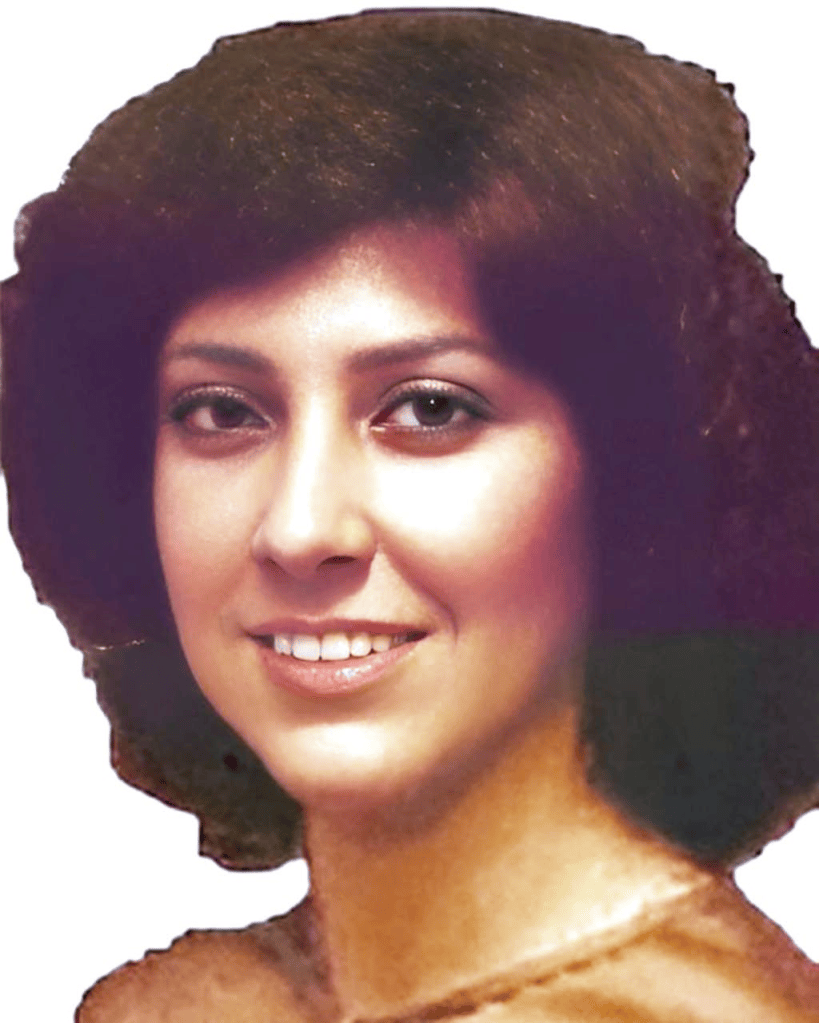
Around an hour later, witnesses heard a woman screaming and saw someone matching Delia’s description struggling with a man inside a distinctive dark-coloured car.
Her purse was left behind.
Her body was found six weeks later.
And the man seen driving away that night has never been publicly identified.
Somewhere inside that missing hour may be the answer to what happened to Delia Adriano.
And after more than four decades, her family is still waiting for someone to provide it.
If you have any information on Delia’s case, please contact the HRPS or Crime Stoppers:
Halton Regional Police Headquarters
2485 North Service Rd. W. Oakville, Ontario Canada, L6M 3H8
Phone: 905-825-4777
TTY Phone: 1-800-990-8199
Fax: 905-825-9416
Crime Stoppers: 1-800-222-TIPS(8477)
Online at: https://www.canadiancrimestoppers.org/submit-a-tip/submit-a-tip
Crime Stoppers provides anonymous tipping
Sources: Halton Regional Police Service, CityNews Toronto, Inside Halton/Oakville Beaver, Canada Unsolved, Defrosting Cold Cases, and archived reporting on the Delia Adriano investigation.


Leave a comment