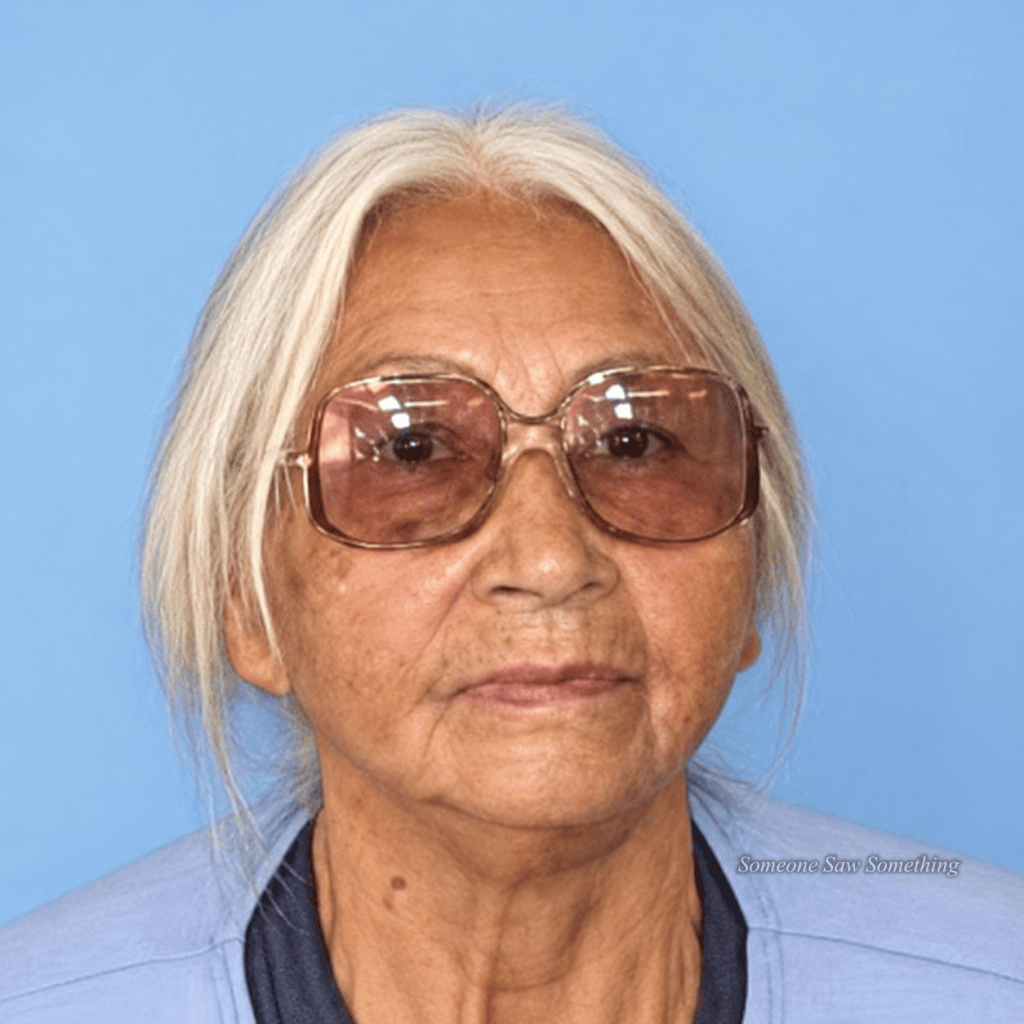
Emily Osmond
Case reference: 2007-1131338
Missing since: September 13, 2007
Missing from: Kawacatoose First Nation, Saskatchewan
Date of Birth: January 29, 1929
Age at Disappearance: 78 yrs
Gender: Female
Ethnicity: Indigenous
Eye Color: Brown
Hair: Grey
Height: 160 cms / 5ft 3in
Weight: 59 kgs / 130 lbs
Notable: Emily walks with a cane. Emily suffered from high blood pressure and severe rheumatoid arthritis.
Emily Osmond was 78 years old when she disappeared from her small acreage near Kawacatoose First Nation in Saskatchewan in September 2007. Nearly nineteen years later, there has been no confirmed sighting of her, no discovery of her belongings away from home, and no answer to the question that has haunted her family ever since: how could a woman with limited mobility seemingly vanish from her own property?
Emily was born on January 29, 1929, in the Raymore area of Saskatchewan. She is an Indigenous woman whose life had taken her far beyond the small Saskatchewan community where she would eventually retire.
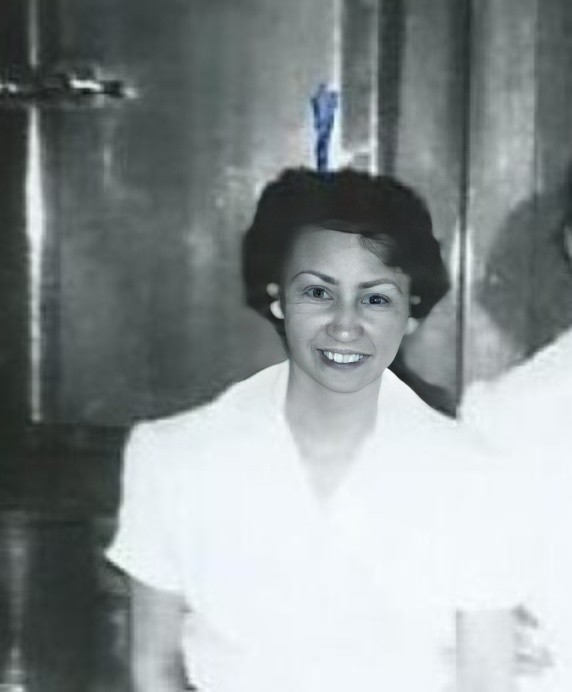
As a young woman, Emily worked as a nursing assistant in Brandon, Manitoba. It was there that she met the man who would become her husband, Jerry. The couple later lived in Alberta, where Emily trained as a chef and eventually earned her Red Seal certification.
Emily and Jerry eventually settled in Whitehorse, Yukon. Together, they adopted seven children and helped raise numerous foster children. Emily spent much of her working life in the food industry, at one point owning a restaurant, and in later years she worked as a chef in mining camps in British Columbia.
When she retired, Emily returned to Saskatchewan.
She settled on a small acreage along the northern edge of Kawacatoose First Nation, approximately 15 miles north of Quinton and near Raymore. It was a simple and isolated way of life. Earlier reporting described her home as having no electricity or running water, but Emily was accustomed to living independently and enjoyed being close to the land.
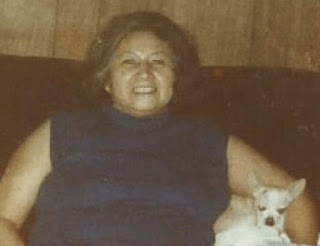
Her niece, Myrna, has remembered Emily as someone who loved her family, cooking, music, the outdoors and animals. She had a particular affection for dogs and was known to take in stray animals that found their way to her property.
That love for her animals would eventually become one of the most troubling details of her disappearance.
Emily did not maintain constant contact with relatives or friends. Because of that, several days could pass without anyone immediately becoming concerned. The official Canada’s Missing record states that her last known contact with family or friends occurred on August 29, 2007.
The exact date of the final confirmed sighting has become somewhat complicated over the years.
The narrative on the Canada’s Missing record states that Emily’s hired helper last saw her on September 9, 2007. Early reports and material published by the Native Women’s Association of Canada also use September 9. More recent Saskatchewan missing-person records list September 13, 2007 and likewise say she was seen by her hired helper.
Regardless of whether that final encounter occurred on September 9 or September 13, by September 20 it was clear that something was wrong. Emily was missing.
Her family began searching, and the scene they encountered at her acreage raised immediate questions.
Emily’s vehicle was still there, her personal belongings were still there, her medication had been left behind and her dogs were still on the property, unattended.
There was no indication that Emily had prepared to leave for an extended period. For a woman remembered for her devotion to her animals, leaving her dogs without care was particularly difficult for her family to understand.
There was another important detail – Emily walked with a cane. Early material concerning her disappearance says she suffered from arthritis in her hip, while later family reporting described severe rheumatoid arthritis. Whichever description is used, the important point is the same: Emily had significant mobility limitations.
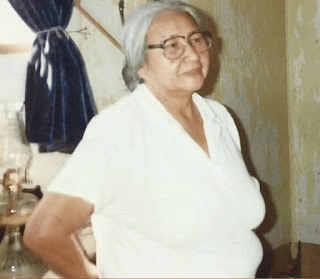
When Myrna learned that her aunt was missing, her immediate reaction was that Emily couldn’t have gone very far.
And when the family reached Emily’s home, her cane was reportedly still inside.
That made the possibilities even more difficult to understand.
If Emily had simply decided to walk somewhere, how far could a 78-year-old woman with mobility problems realistically have travelled without her cane? If she had suffered an accident somewhere around the acreage, why couldn’t anyone find her? And if she hadn’t left on her own, then what had happened at Emily’s home?
The RCMP began searching after she was reported missing. Family members and people from the surrounding community also joined the effort. Searches eventually extended across a large area surrounding the property – secondary reporting describes an approximately 25-kilometre radius being searched.
Nothing was found that explained Emily’s disappearance. There was no discovery of her clothing. No personal possession was found somewhere along a route she might have taken. And, most importantly, there was no sign of Emily.
Two years after she disappeared, RCMP spokesperson Sgt. Doug Coleman said investigators had continued conducting interviews and searches while Emily’s family and community had undertaken searches of their own. At the time, police publicly described the circumstances of her disappearance as suspicious because her dogs, vehicle and medication had all been left behind.
Her family has long struggled with the possibility that someone else was involved.
The television documentary series Taken later devoted an episode to Emily’s disappearance. Members of her family who participated along with retired RCMP member Lloyd Goodwill. The program summarized the family’s belief plainly: they believe Emily was taken.
That remains a family belief rather than a proven conclusion, but the circumstances that led them to it are easy to understand.
Emily was elderly and had difficulty walking. Her transportation was at home. Her medication was at home. Her dogs had been abandoned. She apparently hadn’t told anyone that she intended to leave.
And then she was simply gone.
In November 2017, Myrna brought Emily’s story before the National Inquiry into Missing and Murdered Indigenous Women and Girls during its hearings in Saskatoon.
Her testimony offered another perspective on what those first frightening days were like for the family. Myrna described relatives wanting to continue searching after the initial police search ended. For them, there was no reason to stop. Emily had to be somewhere.
Ten years had passed by the time Myrna spoke at the Inquiry.
There was still no answer.
Emily’s family has also endured another disappearance. Myrna’s nephew, Cody Wolfe, went missing in 2011. His remains were eventually located in 2020. For Myrna, finally knowing what had happened to Cody meant she could once again devote more of her attention to finding her aunt.
Emily has never received that resolution.
There is also a strange error in one of the country’s most important official records of her disappearance.
As of September 2026, Emily’s Canada’s Missing profile displays her “Missing since” date as September 13, 2009 and gives her age at disappearance as 80. Yet the narrative immediately above those fields explicitly says Emily was last seen in September 2007, and the investigative file itself is numbered 2007-1131338.
Other official and historical sources also consistently place her disappearance in 2007. Saskatchewan’s current missing-person database lists September 13, 2007, and the RCMP’s 2025 Red Dress Day tribute states that Emily was 78 when she disappeared in September 2007.
The 2009 date on the Canada’s Missing profile therefore appears to be a database error. Emily was 78 years old when she disappeared in 2007.
The discrepancy over September 9 versus September 13 is more difficult to resolve. Earlier records – including the narrative currently displayed by Canada’s Missing – say her hired helper saw her September 9. Saskatchewan’s current missing-person database and the RCMP’s more recent public material use September 13. Rather than choosing one and presenting it as unquestionably correct, both dates are worth acknowledging.
What has never changed is what investigators found when Emily was gone.
Her vehicle remained at the acreage.
Her belongings remained behind.
Her medication remained behind.
Her dogs were left unattended.
And searches failed to find her.
In May 2025, Saskatchewan RCMP brought renewed attention to Emily’s case as part of Red Dress Day. Myrna shared memories of the woman behind the missing-person photograph: the nursing assistant, trained chef, restaurant owner, mother and foster mother who loved cooking, music, animals and living on the land.
Her words ended not with a theory about what happened, but with the same simple question that has followed the family since 2007:
“Where is Emily?”
Emily is described as 5’3″ tall and approximately 130 pounds, with a slender build, brown eyes and grey hair. She walked with a cane. What she was wearing when she disappeared is unknown.
Her case remains active.
Anyone with information about the disappearance of Emily Osmond can contact the F Division RCMP Historical Case Unit at 639-625-4111 or toll-free at 1-833-502-6861. The RCMP investigative file is 2007-1131338. Anonymous information can be provided through Crime Stoppers at 1-800-222-TIPS (8477).
There are many ways a person can disappear, but Emily’s case contains details that have made it especially difficult for her family to accept that she simply walked away.
She was 78. She had difficulty walking. Her vehicle was there. Her medication was there. Her dogs – the animals she loved and cared for – were waiting for her. Yet somewhere during those quiet days in September 2007, Emily Osmond disappeared from her little acreage in rural Saskatchewan.
Searchers looked for her across the surrounding countryside. Police conducted interviews. Her family continued searching. Her story was taken before a national inquiry and later shared with audiences across Canada.
Still, almost nineteen years later, there has been no discovery that can tell her family what happened.
The little acreage Emily called home remained behind.
Emily did not.
And until someone comes forward with the piece of information that has been missing since 2007, one question remains at the heart of her family’s search:
Where is Emily Osmond?
Sources: Royal Canadian Mounted Police/Canada’s Missing, Saskatchewan Association of Chiefs of Police Missing Persons Database, Saskatchewan RCMP, National Inquiry into Missing and Murdered Indigenous Women and Girls, Native Women’s Association of Canada, Global News, MBC Radio, APTN’s Taken, Justice for Native People.
If you have any information regarding the disappearance of Emily Osmond please contact one of the following agencies:
F Division RCMP Historical Case Unit:
Telephone: (639) 625-4111 or Toll free 1-833-502-6861
Email: saskmissingpersons@rcmp-grc.gc.ca
If you wish to remain anonymous please contact Saskatchewan Crime Stoppers at:
Telephone: 1-800-222-TIPS (8477)
Online at: http://www.saskcrimestoppers.com
Crime Stoppers provides anonymous tipping
Send email to the National Centre for Missing Persons and Unidentified Remains at: canadasmissing-disparuscanada@rcmp-grc.gc.ca
 Someone Saw Something
Leave a comment