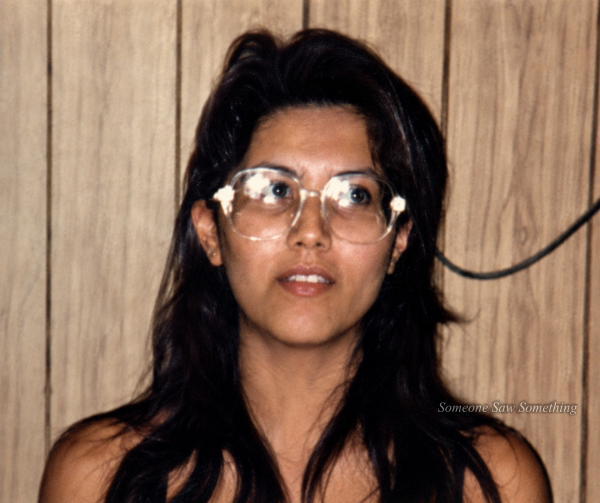
Roberta Marie Ferguson was 19 years old when she disappeared from the Cultus Lake area of British Columbia on August 24, 1988. Born on November 19, 1968, Roberta was the youngest of nine children and grew up in a close-knit family in Grimshaw, Alberta. Her sisters later remembered her as quiet at times but also funny, kindhearted and strong-willed. She loved drawing, dancing and reading Archie comics, and when her sisters were sick, she jokingly transformed herself into “Dr. Mentality,” bringing them soup and trying to make them feel better.
After Roberta’s mother died when she was 14, she spent time living with her older sisters Carol and Marilyn in Edmonton before eventually moving to Surrey, British Columbia, to live with another sister, Verl. By the summer of 1988, Roberta had completed a work-study program and joined a group of friends for a camping trip at Sunnyside Campground at Cultus Lake, near Chilliwack.

Roberta arrived at the campground with the group on August 23, 1988. By the following day, however, she wasn’t feeling well. She had developed a fever and reportedly decided that rather than remain at the campground, she wanted to return home to Surrey. She told the others that she planned to leave and make her way home by bus.
At approximately 8:00pm on August 24, Roberta left the campground on foot. She was carrying an army-green knapsack and was reportedly wearing a black shirt with a navy-blue tank top over it, black stretchy pants rolled to her knees, dirty white running shoes and her glasses. Roberta was approximately 5 feet 5 inches tall and weighed between 111 and 120 pounds, with long, curly black or dark-brown hair and dark eyes. She also had a scar on her right knee.
Roberta never arrived home.
There were reported sightings after she left the campground that have become important to the mystery surrounding her disappearance. A young woman believed to have been Roberta was reportedly seen walking in the Cultus Lake area. Another account placed her near the intersection of Vedder Mountain Road and Cultus Lake Road, where she was reportedly seen talking with a man driving a sporty, fire-engine-red vehicle. The man was described as being of average height with blond or light-brown hair and a prominent jaw. It has never been publicly established who he was or whether Roberta actually entered his vehicle.
When Roberta failed to return home or contact her family, her loved ones quickly became concerned. Her disappearance was completely out of character, according to her sisters. However, when the family initially tried to report her missing, they said they were told that because Roberta was an adult, they had to wait 48 hours. There is no required 48-hour waiting period for reporting a missing person in Canada.
Rather than simply wait, Roberta’s family started to search for her themselves. They made their own missing-person posters and travelled to the Cultus Lake area looking for any indication of where she had gone. Police eventually became involved, but the searches produced no confirmed trace of Roberta.
Years passed without an answer, but one man would eventually draw particular attention in connection with Roberta’s disappearance: Terry Arnold.
Arnold had a significant history of violence against girls and young women and had been convicted of sexually assaulting a teenage girl while staying at a campground in the Chilliwack area in 1988. Authorities reportedly looked at Arnold in connection with Roberta’s disappearance, although RCMP representatives did not publicly discuss the matter in detail because he was never charged in her case.
Reports have also stated that while Arnold was incarcerated in 2000, he claimed to have been the last person to see Roberta alive. That statement understandably attracted the attention of her family and investigators, particularly given his history and presence in the region around the period when Roberta disappeared. However, no publicly available evidence has established that Arnold abducted or killed Roberta, and he was never convicted of anything connected with her disappearance.
Arnold died by suicide in 2005. Roberta’s sister Carol has publicly discussed her suspicions that a man who died by suicide that year and was considered a possible serial offender may have been responsible for what happened to her sister. However, Carol also acknowledged that she had no proof.
The red sports car sighting remains another unresolved piece of the case. If the woman seen near the vehicle really was Roberta, identifying its driver could potentially explain what happened after she walked away from the campground. But publicly available information does not establish that Roberta got into the car, nor does it establish that its unidentified driver harmed her. It remains a witness report rather than a proven account of her final movements.
More than three decades later, Roberta has never been found. There has been no confirmed communication from her and no discovery that has conclusively explained what happened after she left Cultus Lake that evening. Her disappearance remains an unresolved missing-person case, and appeals for information have continued decades later.
At the heart of the case is a remarkably short window of uncertainty. Roberta wasn’t planning to disappear or embark on a new life as far as anything publicly known indicates. She was feeling unwell during a camping trip and wanted to go home. She left Sunnyside Campground on foot expecting to make her way back to Surrey, and somewhere along the way, her trail disappeared.
Whether the young woman seen beside the red sports car was Roberta, whether Terry Arnold actually encountered her that evening, or whether something entirely different happened after she left the campground remains unknown.
Roberta’s family has spent decades waiting for the piece of information that could finally answer those questions.
Note: One clarification is important regarding Robert Pickton. In the early 2000s, Roberta’s family provided DNA samples so investigators could determine whether any of the unidentified remains or DNA recovered from Pickton’s Port Coquitlam property belonged to Roberta. No remains or DNA recovered from the property were identified as Roberta’s, and there is no established evidence that she was one of Pickton’s victims. Roberta is not considered a confirmed Pickton victim. The DNA comparison was an effort to determine whether she could be among the unidentified victims, not evidence that Pickton was responsible for her disappearance.
If you have information on Roberta’s case, please contact any of the following:
Fraser Valley RCMP Upper Fraser Valley Regional Detachment: 604-792-4611
Reference Case#: 1988-14345
Canada’s Missing Case reference: 2014002991
Crime Stoppers: 1-800-222-TIPS(8477)
Online at: https://www.canadiancrimestoppers.org/submit-a-tip/submit-a-tip
Crime Stoppers provides anonymous tipping
Send email to the National Centre for Missing Persons and Unidentified Remains at: canadasmissing-disparuscanada@rcmp-grc.gc.ca
Sources: Canada’s Missing, The Doe Network, Justice for Native People, archived Windspeaker material, VICE, Stories of the Unsolved, MissingPeople.ca, Fraser Valley News Network, and historical reporting concerning Terry Arnold.
🕯️ Subscribe to Someone Saw Something. I dig through the details, ask the unanswered questions, and occasionally fall down research rabbit holes so you don’t have to. 🧡

