On August 18, 1991, 42-year-old Viola Isabella Panacheese disappeared in Sioux Lookout, Ontario. More than three decades later, her family still does not know what happened to her. There has been no publicly confirmed sighting establishing where she went after that day, no discovery that has explained her disappearance and no publicly identified person responsible for whatever happened to her.
But Viola’s disappearance would eventually become troubling for another reason. Years after she vanished, her family learned that the original police file – including precious photographs they had provided to help find her – had apparently been lost.
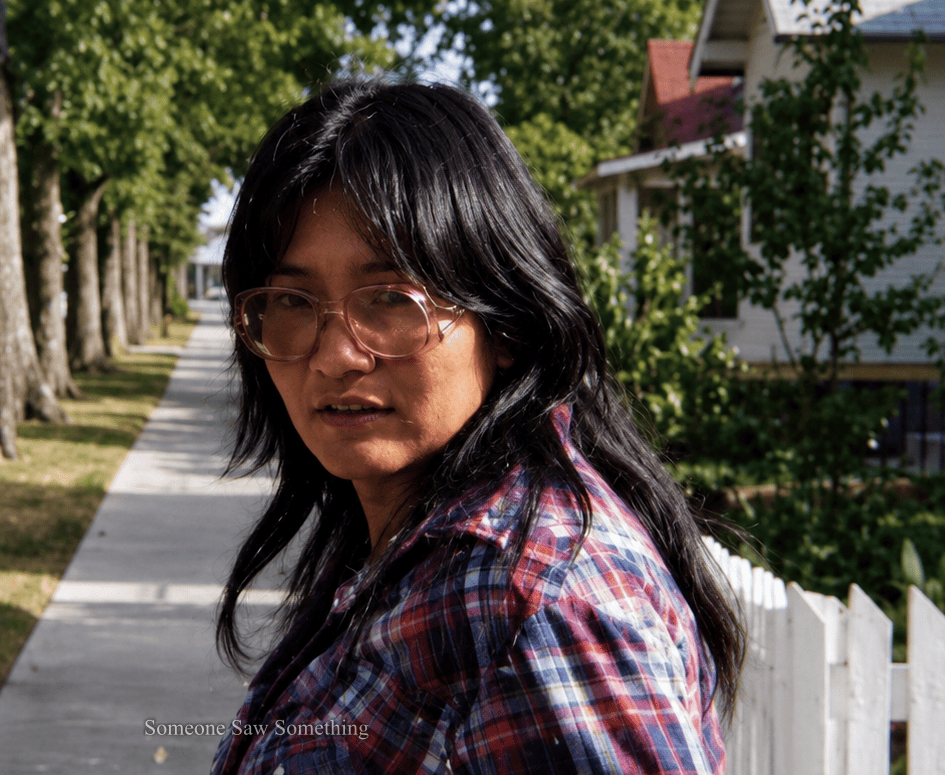
Viola was born in 1949 and was from Mishkeegogamang First Nation in Northwestern Ontario. She was the mother of four children and was living in Winnipeg, Manitoba around the time she disappeared. Family accounts indicate that Viola had travelled to Sioux Lookout in August 1991 to visit her daughters and grandchildren.
The surviving accounts of Viola’s final days do not line up perfectly, which is important when looking at a case this old. Canada’s Missing, the national database administered by the RCMP, states simply that Viola was last seen on August 18, 1991, walking along Lakeshore Avenue in Sioux Lookout.
Historical information published by the Ontario Provincial Police provides a somewhat more specific account. It states that Viola was reported missing on August 19 and had last been seen at approximately 10:00am on August 18 at the west end of the CN railway crossing in Sioux Lookout. According to that OPP material, the area was extensively searched without success.
Family testimony provides another glimpse into what was happening around the time Viola disappeared.
Her oldest daughter, Lilly Southwind, later spoke publicly about those days during the National Inquiry into Missing and Murdered Indigenous Women and Girls. Lilly remembered her mother being in Sioux Lookout and recalled leaving Viola at a hotel with her brother Arthur, intending to return for Viola.
When Lilly eventually came back, however, the situation had changed. The people who had been staying in the room had apparently been made to leave. Viola was no longer there.
Lilly began trying to find her mother herself. She asked around Sioux Lookout and checked places where people gathered. According to her later testimony, she even searched areas near the water after people suggested places where Viola might have gone, but nothing led her to her mother.
Lilly later recalled that an aunt came to Sioux Lookout and encouraged her to report Viola missing. According to Lilly’s testimony, Viola had been missing for approximately three days when she approached police. That recollection differs somewhat from the historical OPP material stating Viola was formally reported missing on August 19, the day after the official last seen date. After more than two decades, differences in remembered dates are not unusual, but the discrepancy is worth acknowledging rather than trying to force the accounts into a single timeline.
What is firmly established by the current Canada’s Missing record is that Viola disappeared from Sioux Lookout on August 18, 1991. At the time, Viola was 42 years old. She stood approximately five feet two inches tall and weighed about 119 pounds. She had a slender build, brown eyes and long, straight black hair. Viola normally wore glasses, but according to the official missing person record, she was not wearing them when she disappeared.
She also had a distinctive burn scar on her right shin extending from her knee to her ankle. Viola’s clothing is described in considerable detail in the official record. She was wearing a black spring jacket, blue jeans, a plaid shirt described as blue, purple, lavender or mauve, and black “Chinese”-style slippers.
Some secondary missing-person sources have also reported that Viola had the initials “VG” tattooed on her left hand. That identifying feature does not appear in the current Canada’s Missing entry, so it should be treated as information from secondary historical sources rather than part of her presently listed official description.
The OPP searched for Viola, but nothing was found that explained where she had gone. Historical police material says the area surrounding her reported last sighting was searched extensively. Other accounts have described searches involving dogs and helicopters. There was no discovery that publicly established what happened after Viola’s final known movements.
As the years passed, Lilly continued asking questions about her mother’s case. She had seen Viola’s police file during the earlier years of the investigation and later recalled that it contained signed witness statements. Investigators had gathered information while memories were still relatively fresh, and Lilly remembered being asked whether there were other people police should interview.
The file existed. Lilly had seen it. That would become extremely important years later.
When Viola initially disappeared, police apparently did not have a suitable current photograph of her to circulate. Lilly therefore provided photographs belonging to the family. She did so reluctantly. Those photographs weren’t simply copies pulled from a phone or computer. This was 1991. They were physical family photographs, and Lilly specifically wanted them returned. Finding her mother mattered more, so she handed them over but the photographs never came back.
Over the years, Lilly continued asking police to return them. Eventually, she received an answer she never expected. According to Lilly’s testimony and reporting by APTN News, an officer told her that police no longer had the photographs because Viola’s file itself had been lost.
Lilly said she was told that when the police detachment moved into another building, the missing material may have ended up in a “burn pile.” For a daughter who had already spent years wondering where her mother was, the revelation created an entirely different kind of anguish.
When had the file disappeared? How long had investigators been without it? What information had been contained inside? Could witnesses have been interviewed again while their memories were clearer? And had something been lost that might have helped explain what happened to Viola?
Lilly knew there had once been witness statements because she remembered seeing them. By the time she learned the original file was gone, some of the people connected with the early investigation had died.
Police subsequently attempted to rebuild Viola’s case file from surviving material, including officers’ notes. But reconstructing a decades-old investigation could never guarantee that every detail contained in the original record would be recovered.
Viola’s brother James Munroe also spoke about his sister during the National Inquiry. His testimony showed how heavily Viola’s disappearance continued to weigh on him. James described himself as one of the last people to see his sister around the time she disappeared and spoke about the guilt he carried, wondering whether there had been something more he could have done to protect or help her. He wanted answers about what happened to Viola. So did the rest of the family.
Despite the passage of time, there is still remarkably little publicly available evidence explaining what happened after Viola’s final known movements in Sioux Lookout. There is no publicly established evidence proving that Viola was murdered. No suspect has been publicly identified in connection with her disappearance, and no one has been publicly charged with causing her death.
Viola remains officially classified as missing.
That leaves several possibilities. Sioux Lookout is surrounded by lakes, waterways, railway corridors and vast areas of wilderness. An accident therefore cannot be dismissed. If Viola entered the water, became injured or ended up somewhere outside the populated area, locating her could have been extremely difficult.
Foul play also cannot be excluded. Viola disappeared without any known subsequent contact with her family, and the publicly available information does not establish where she went after she was last seen. It remains possible that she encountered someone during those missing hours and that investigators never discovered what happened afterward.
Another possibility is that Viola deliberately left the area. Yet there is no known evidence establishing that she successfully began a new life elsewhere or deliberately cut all contact with her children and family.
Without additional evidence, none of these possibilities can responsibly be presented as the answer.
The loss of the original investigative file makes the uncertainty surrounding Viola’s disappearance particularly painful.
There may once have been statements detailing who saw Viola, who she had been with, where she intended to go or what she had said during her final hours in Sioux Lookout. Some of that information may have survived through officers’ notes and the reconstructed investigation, but the public has never been given enough detail to know precisely what was lost.
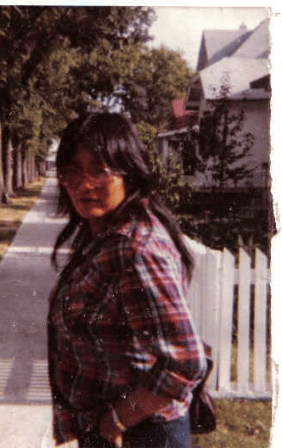
What remains is a family that has continued waiting.
Viola’s name has been remembered during Red Dress Day events in Sioux Lookout and within discussions surrounding missing and murdered Indigenous women and girls. Community members have specifically spoken about Viola as one of the women from Mishkeegogamang First Nation who disappeared, leaving relatives still wondering where their loved one is and what happened to her.
More than thirty-four years have now passed since Viola disappeared.
Her children grew older without knowing what happened to their mother. Witnesses aged. Some died. Memories faded. Sioux Lookout changed. And somewhere during those years, even part of the investigation intended to help find Viola disappeared.
Yet Viola herself has not been forgotten.
As of 2026, Canada’s Missing continues to list Viola Isabella Panacheese as missing. Somewhere between Viola’s final known movements in Sioux Lookout on August 18, 1991, and whatever happened afterward is the answer her family has spent more than three decades searching for.
Perhaps someone saw Viola that day and never understood the importance of what they witnessed. Perhaps someone knew more than they ever told investigators. Perhaps information that could have changed the direction of the investigation was contained somewhere in that original police file. Or perhaps Viola went somewhere that simply wasn’t found during the searches.
Those possibilities remain speculation. What is known is painfully simple.
Viola Isabella Panacheese was in Sioux Lookout on August 18, 1991 and then she disappeared.
More than thirty-four years later, her family is still waiting to learn where she went.
If you have information on Viola’s case, please contact any of the following:
Sioux Lookout OPP OPP ONCMPUR:
Telephone: 1-877-934-6363 or 1-705-330-4144
Email: opp.isb.resolve@opp.ca
Reference Case#: RM05022815
Canada’s Missing Case reference: 2006023499
Crime Stoppers: 1-800-222-TIPS(8477)
Online at: https://www.canadiancrimestoppers.org/submit-a-tip/submit-a-tip
Crime Stoppers provides anonymous tipping
Send email to the National Centre for Missing Persons and Unidentified Remains at: canadasmissing-disparuscanada@rcmp-grc.gc.ca
Sources: Canada’s Missing, Ontario Provincial Police, National Inquiry into Missing and Murdered Indigenous Women and Girls—including testimony and statements from Viola’s family—APTN News, CBC News, the Sioux Lookout Bulletin, and Stories of the Unsolved.
🕯️ Subscribe to Someone Saw Something. I dig through the details, ask the unanswered questions, and occasionally fall down research rabbit holes so you don’t have to. 🧡

