On the evening of August 10, 1970, 22-year-old Chenel Dubé made what must have seemed like an entirely ordinary telephone call. He contacted his mother in Montreal, Quebec, and told her that he would be home later. There is nothing in the limited information released by police to suggest Chenel sounded frightened, indicated that he was in trouble, or gave his mother any reason to believe that this conversation would be the last time she would hear from him. Chenel never made it home.
More than half a century later, that brief telephone conversation remains one of the final known moments in a disappearance containing remarkably few publicly available clues. Chenel is still listed as an unresolved missing person by both the Service de police de la Ville de Montréal (SPVM) and Canada’s national missing-person database.
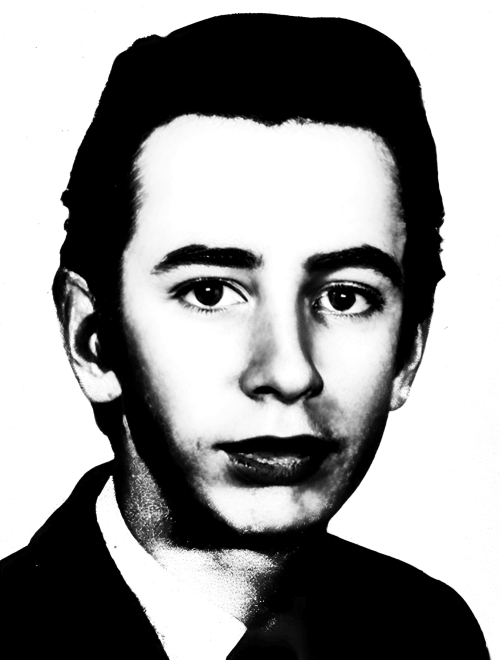
Chenel was born in 1948 and was 22 when he vanished. Police describe him as a white man with a light or fair complexion and a medium build. He stood approximately 5 feet 7 inches tall, weighed around 143 pounds, and had short black hair and brown eyes.
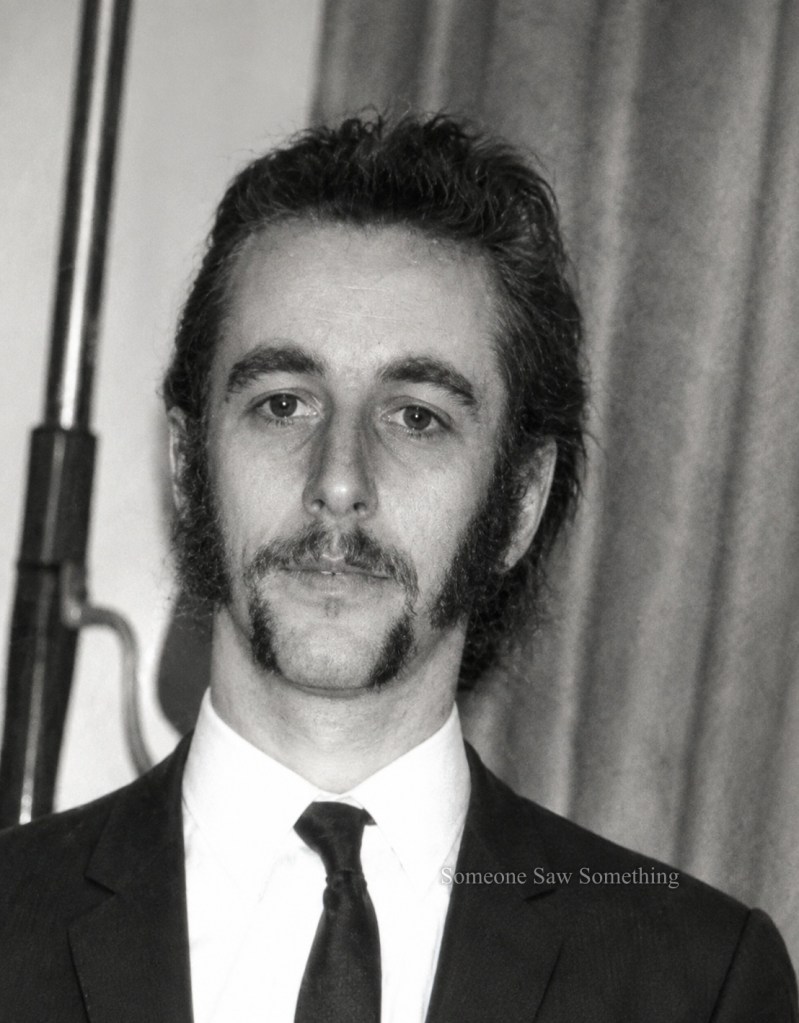
Very little has been made public about Chenel’s life before his disappearance. The current police profiles don’t tell us where he worked, what he enjoyed doing, whether he was in a relationship, who his closest friends were, or what plans he had for that August evening. Even the location from which he made that final telephone call has not been publicly identified. All we know from the official accounts is that Chenel called his mother that evening and told her he would be coming home later. He didn’t.
Then, three days after Chenel disappeared, something was found that should have provided investigators with an important starting point: his vehicle. Chenel drove a red 1964 Ford Econoline. The distinctive vehicle was discovered in the parking lot of a restaurant in what was then Ville Saint-Laurent, today the Saint-Laurent borough of Montreal. According to the SPVM, the keys were still inside the vehicle. Chenel was nowhere to be found.
That abandoned Econoline is perhaps the most intriguing piece of publicly known evidence in Chenel’s case because it creates an entirely new set of questions. Which restaurant was it? When did the van arrive? Was Chenel the person who parked it there? Did anyone working at the restaurant remember seeing him? Was anything missing from inside? Was the vehicle locked or unlocked? Did investigators find anything suggesting that another person had been inside?
Perhaps most importantly, how long had the Econoline been sitting in that parking lot before someone realized its owner was missing? None of those answers appear in the current public profiles maintained by Canada’s Missing or Montreal police. The SPVM tells us where the vehicle was generally found and that its keys remained inside, but the publicly available account stops there.
That makes the three days between Chenel’s telephone call and the discovery of the van especially important. If the vehicle appeared in Saint-Laurent shortly after Chenel disappeared, whatever happened to him may have occurred that first night. If it arrived later, someone—possibly Chenel himself—was moving around Montreal during the period in which his whereabouts were unknown. The surviving public information doesn’t tell us which scenario investigators believe is more likely.
There is also an unusual discrepancy within the official records themselves. The current SPVM profile identifies Chenel as a person missing since August 10, 1970, and Canada’s Missing independently gives the same date. However, narrative text on the SPVM page has also given July 10, 1970 as the date Chenel was last seen. Because both the national database and the primary date displayed by SPVM support August 10, August 10, 1970 is the better-supported date, while the conflicting July date appears likely to be an error.
Beyond that, Chenel’s trail becomes remarkably cold. Neither official profile identifies a confirmed sighting after his disappearance. There is no publicly identified suspect or person of interest, no public explanation for why his Econoline was left in Saint-Laurent, and no indication in the publicly released information that investigators discovered evidence of violence inside the vehicle.
The circumstances certainly seem unusual. A 22-year-old man tells his mother he’ll be home later, disappears, and three days later his vehicle is found abandoned with the keys still inside. But unusual circumstances aren’t themselves proof of foul play. Chenel could have voluntarily left the vehicle intending to return. He could have gotten into another vehicle or walked away from the restaurant. Someone else could conceivably have driven his Econoline there. Something could also have happened to Chenel before the vehicle was abandoned. All of those scenarios are possibilities, but none has been established by the publicly released evidence.
Even the possibility of a voluntary disappearance is difficult to evaluate because the public doesn’t know what investigators subsequently found. We don’t know whether Chenel accessed money after August 10, contacted friends, collected a paycheque, travelled outside Quebec, crossed the Canadian border, obtained identification elsewhere, or left behind circumstances suggesting that he intended to begin another life.
Similarly, there is no publicly released evidence allowing us to conclude that Chenel was murdered. There is no publicly named suspect, no announced crime scene and no publicly identified evidence of an assault. Montreal police continue to carry Chenel as an unresolved missing person rather than publicly providing an explanation for what happened to him.
The era in which Chenel disappeared also matters. In 1970, investigators didn’t have cellphones generating location histories, widespread surveillance cameras recording movements throughout the city, automated licence-plate readers or the enormous digital trail people routinely leave behind today. Investigators were much more dependent upon witnesses, telephone calls, physical records and traditional police work.
If someone saw Chenel at the Saint-Laurent restaurant, noticed his red Econoline arriving, gave him a ride, or spoke with him after his final call home, that person’s recollection could have been one of the most important pieces of evidence available. Whether such a witness was ever located has not been made public.
The vehicle itself would also have been enormously important. A red 1964 Ford Econoline was distinctive enough that someone might have remembered seeing it. Establishing where it travelled and when it arrived in Saint-Laurent could potentially have helped investigators reconstruct Chenel’s movements after he called his mother. Again, however, the public record doesn’t tell us whether police were ever able to establish that timeline.
Chenel’s case has received remarkably little attention compared with many Canadian disappearances from the same era. There are no widely circulated interviews with his family readily available today, no extensive documentary treatment of his disappearance, and very little surviving contemporary reporting accessible through ordinary online searches. That lack of preserved coverage may help explain why so few details about Chenel’s life and disappearance have entered the modern public record.
The Doe Network has also added Chenel to its missing-person database as case 6518DMQC, giving his disappearance another avenue for exposure and potential comparison with unidentified-person cases. The Doe Network is a volunteer organization rather than a law-enforcement agency, so its information is best considered alongside the official records maintained by Montreal police and Canada’s Missing.
Comparisons with unidentified remains are particularly relevant in a disappearance this old. After more than 55 years, the possibility that Chenel died without being identified cannot reasonably be ignored. Canada’s National Centre for Missing Persons and Unidentified Remains facilitates comparisons between longstanding missing-person investigations and unidentified remains, and Chenel’s continued presence in the national database means his information remains available for that kind of investigative work.
At one point, amateur researchers even wondered whether Chenel could have been the unidentified Alberta homicide victim who became widely known as “Septic Tank Sam.” That possibility has since been conclusively eliminated. In 2021, the unidentified man was identified through investigative genetic genealogy as Gordon Edwin Sanderson. Whatever happened to Chenel, he was not that unidentified victim.
Unfortunately, eliminating one possibility does nothing to explain Chenel’s own disappearance. More than five decades later, his story can still be reduced to an extraordinarily short sequence of events. On August 10, 1970, 22-year-old Chenel Dubé was in Montreal. That evening, he telephoned his mother and told her he would be home later. He never arrived. Approximately three days later, his red 1964 Ford Econoline was discovered sitting in a restaurant parking lot in Saint-Laurent with its keys still inside. Chenel was gone.
Somewhere within those three days may lie the answer investigators have been searching for ever since. Perhaps someone remembers the restaurant where the Econoline was found. Perhaps someone remembers seeing the distinctive red van during those days in August 1970. Perhaps Chenel mentioned plans to a friend that he never shared with his mother. Perhaps someone saw him after he made that final call and never realized their encounter was important. Or perhaps someone has known all along what happened.
Today, Chenel remains frozen in time in the photographs and descriptions preserved by missing-person organizations: 22 years old, telling his mother he’d be home later. More than 55 years later, he still hasn’t come home, and Montreal police continue to seek the information that might finally explain what happened after that last telephone call.
Anyone with information concerning Chenel Dubé can contact the Service de police de la Ville de Montréal, referencing case MTLEV1600679258. Even after all these years, a seemingly insignificant memory about Chenel, his movements, or that distinctive red Ford Econoline could potentially provide investigators with a piece of his story that has been missing since 1970.
If you have information on Chenel’s case, please contact any of the following:
Service de police de la Ville de Montréal: 514-393-1133
Reference Case#: MTLEV1600679258
Canada’s Missing Case reference: 2016044292
Crime Stoppers: 1-800-222-TIPS(8477)
Online at: https://www.canadiancrimestoppers.org/submit-a-tip/submit-a-tip
Crime Stoppers provides anonymous tipping
Send email to the National Centre for Missing Persons and Unidentified Remains at: canadasmissing-disparuscanada@rcmp-grc.gc.ca
Sources: Canada’s Missing, SPVM, Doe Network
🕯️ Subscribe to Someone Saw Something. I dig through the details, ask the unanswered questions, and occasionally fall down research rabbit holes so you don’t have to. 🧡

